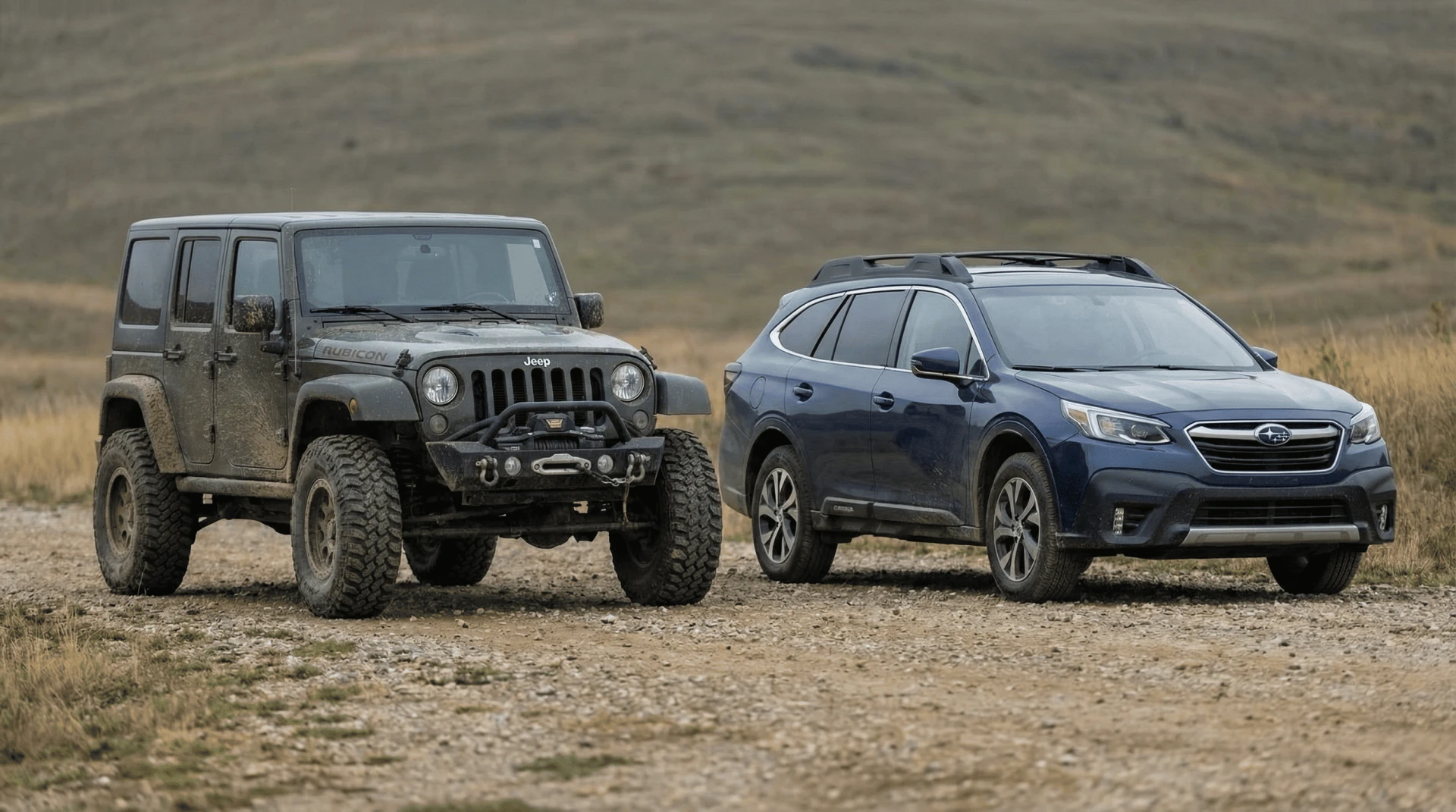

In one line, AWD is built for confident everyday grip on mixed or bad roads, while 4WD is built for serious off-road and heavy-duty use.
What AWD really is
All-wheel drive sends power to all four wheels, usually through a computer-controlled system that can vary how much torque goes to the front and rear. In many modern cars and crossovers, AWD runs mostly in front- or rear-drive mode, then automatically shuffles power when it senses wheel slip on rain, snow, gravel, or light trails.
Here’s the thing: you don’t need to press anything or think about “engaging” it. The system just works in the background, constantly adjusting for traction, stability, and cornering, which makes it ideal for daily commuting, highway driving, and occasional poor weather.
What 4WD really is
Four-wheel drive, often called 4x4, is usually a more mechanical, heavy-duty system designed for off-road, towing, and very low-traction situations. It typically uses a transfer case to lock the front and rear axles together so both ends get power, sometimes with selectable high and low range for different speeds and terrains.
What this really means is you often have to choose when to turn 4WD on or off, and when to use low range, via a lever or switch. Because the axles are locked, classic part-time 4WD is not meant for dry paved roads at speed; using it there can cause drivetrain binding and extra wear.
Core differences: AWD vs 4WD
Let’s break down AWD vs 4WD into plain, practical distinctions:
- Operation
AWD is mostly automatic and always “ready,” managing torque with clutches and differentials as conditions change.
4WD is usually driver-selectable, using a transfer case and sometimes low range to handle deep mud, rocks, and steep climbs. - Terrain focus
AWD shines on paved roads, wet highways, light snow, gravel, and mild off-road tracks.
4WD shines when roads disappear: ruts, sand dunes, rocky trails, deep snow, and heavy towing on rough ground. - Hardware and complexity
AWD systems favour electronic control and are packaged into unibody cars and crossovers for better on-road comfort.
4WD systems are usually found on ladder-frame SUVs and pickups with stronger axles, transfer cases, and sometimes locking differentials. - Everyday drivability
AWD feels like a normal car: smooth, predictable, and happy to stay in that mode all the time.
Traditional 4WD needs you to think about when to engage it and is best reserved for low-grip or off-road surfaces.
Pros and cons of AWD
AWD has a very clear value proposition for normal drivers:
- Advantages
- Better traction when accelerating on rain, slush, or light snow, reducing wheelspin and helping you get moving.
- Improved stability and confidence on twisty or uneven roads, especially in bad weather.
- No learning curve: you just drive; the system does the thinking.
- Trade-offs
- More weight and drivetrain drag compared to a two-wheel-drive version, which usually means slightly lower fuel economy.
- Not a magic safety net: it helps you go and stay stable, but it does not shorten braking distances on ice or wet roads.
- Limited in extreme off-road: lack of low range and heavy-duty hardware means it can’t match a proper 4x4 on very rough terrain.
For most city dwellers and highway commuters who face seasonal rain or moderate snow, AWD is often the smarter, less stressful choice.
Pros and cons of 4WD
4WD exists for people who genuinely need serious traction and control off the tarmac:
- Advantages
- Excellent traction in deep mud, sand, rocky trails, and heavy snow when low range and locked driveline are used correctly.
- Better suited to towing heavy trailers or loads, especially on rough or unpaved surfaces.
- Often paired with higher ground clearance, stronger chassis, and off-road hardware like skid plates and locking differentials.
- Trade-offs
- Heavier and mechanically more complex, which typically hurts fuel efficiency compared with 2WD or many AWD systems.
- Not ideal to use in locked 4WD mode on dry pavement due to potential binding and extra wear.
- Ride and handling can feel more truck-like and less refined than AWD-based crossovers, especially if built on a body-on-frame platform.
If most of your driving is on tarmac and your “off-road” use is a gravel parking lot or the odd bad road, a full 4WD system is usually overkill.
How to choose: AWD or 4WD for you
Here’s where things get practical. Ask yourself a few direct questions:
- Where do you actually drive?
- Mostly city and highway, with occasional bad weather: AWD gives you extra confidence without the complexity of 4WD.
- Regular trails, farm tracks, mountains, sand dunes, or remote areas: 4WD with low range and good tyres is worth it.
- What’s your climate like?
- Light to moderate snow, lots of rain, mixed conditions: AWD is usually enough, especially with good winter or all-weather tyres.
- Heavy snow, unploughed roads, or steep unpaved routes: 4WD plus appropriate tyres can make a real difference.
- What do you use the vehicle for?
- Family hauling, commuting, weekend trips, and the occasional dirt road: AWD crossover or car is a strong fit.
- Towing caravans, boats, or trailers and exploring serious off-road routes: 4WD SUV or pickup is the safer long-term bet.
What this really means is you should match the drivetrain to your worst realistic scenario, not the most dramatic one you can imagine once a decade.
Final takeaway: AWD vs 4WD
If you want confident, low-effort traction for daily life with some insurance against bad weather, AWD is usually the right tool. If you are planning genuine off-road use, heavy towing, or live where roads often turn into mud, deep snow, or ruts, 4WD earns its keep.
Both send power to all four wheels, but they are tuned for different jobs; choosing well is about being honest with how and where you really drive.































Sign in to leave a comment.