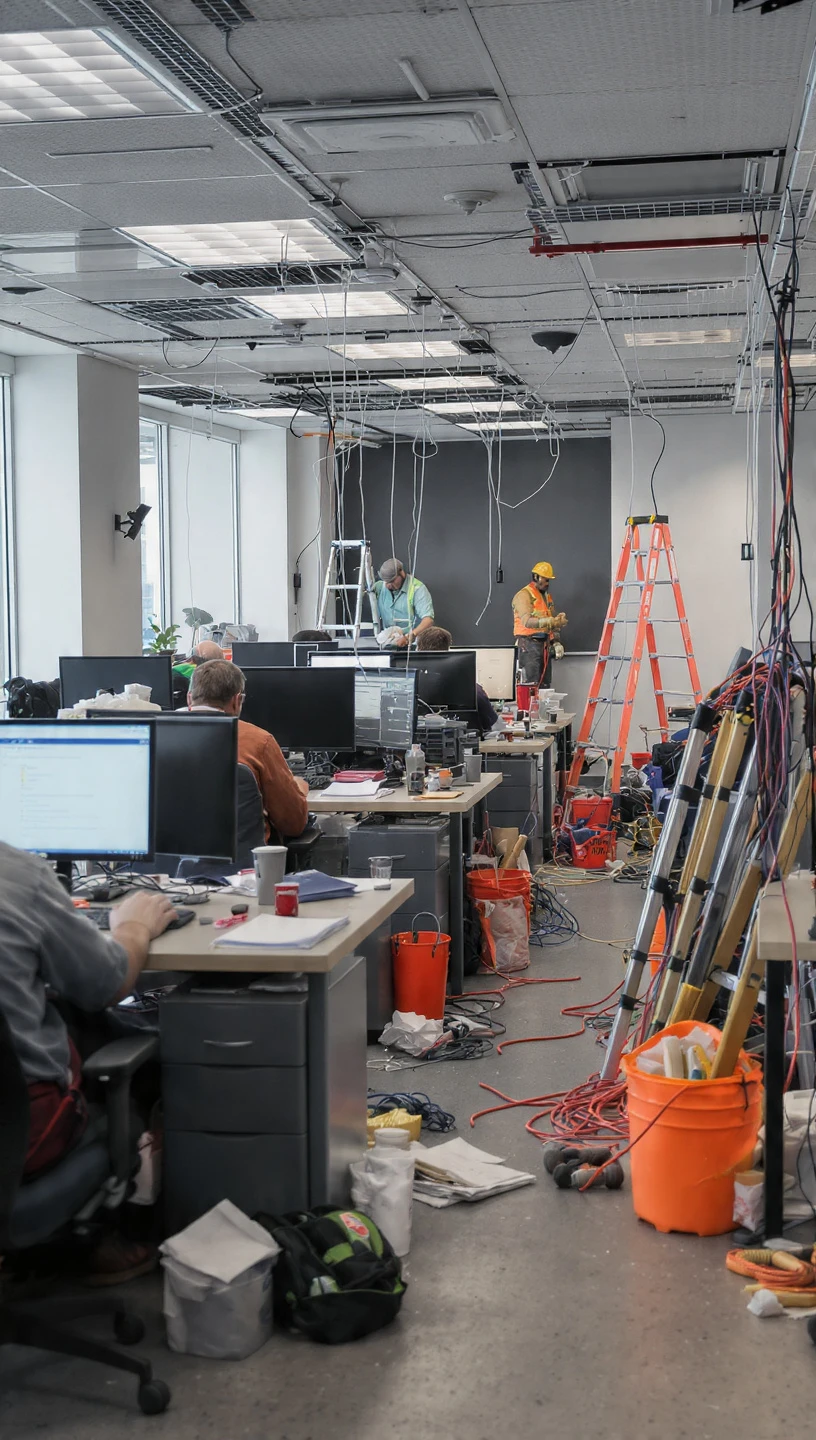

Cheap Electrical Work Always Shows Up During Business Hours
Here’s the harsh truth: if your commercial electrical work was done on the cheap, the problems won’t wait for nights or weekends to appear. They show up exactly when it hurts — during business hours.
After more than a decade on commercial sites, I can tell you this from experience: nothing exposes poor electrical work faster than a building full of people using it at peak.
Why Problems Wait Until Business Hours
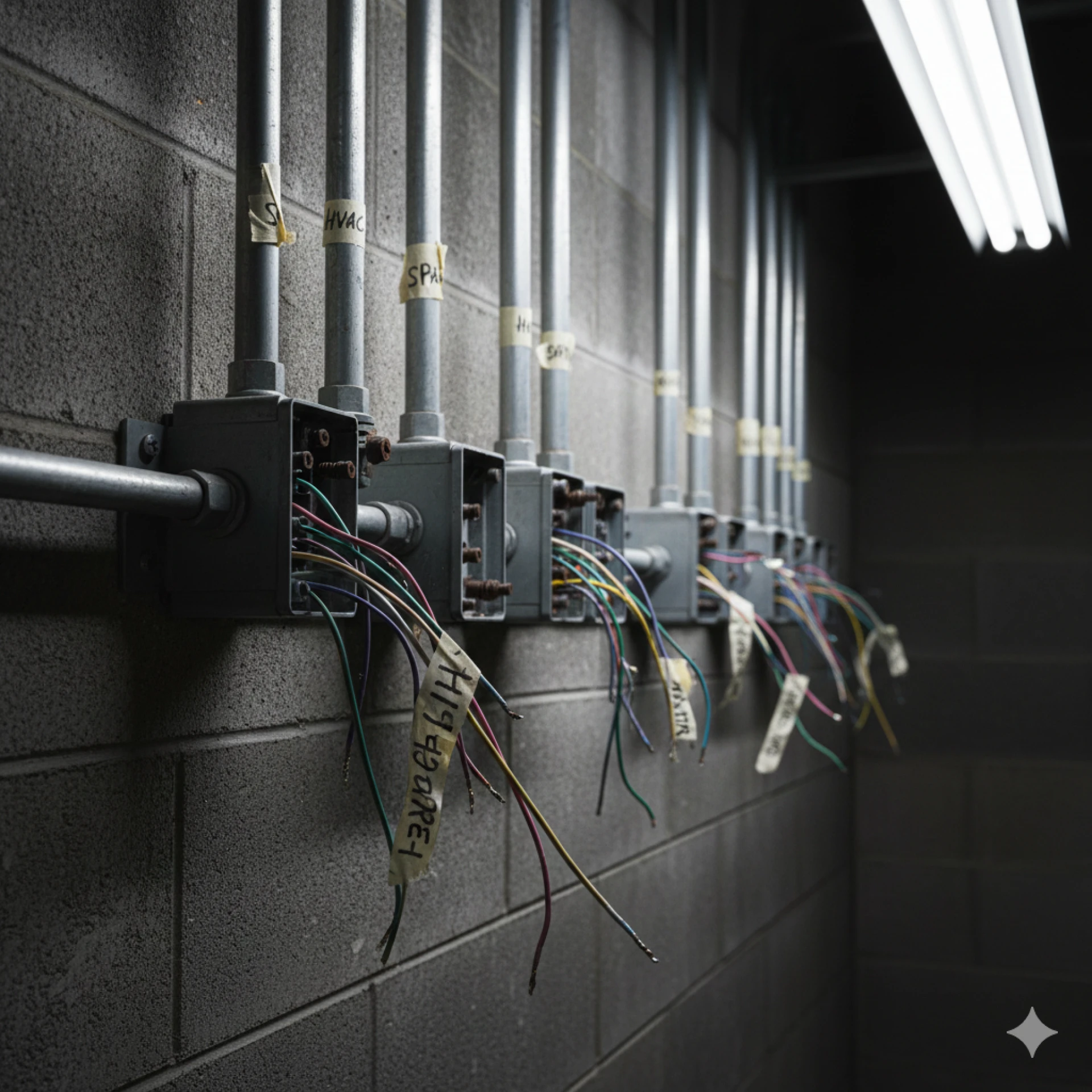
Cheap electrical work often cuts corners in ways that inspections can’t detect:
- Load calculations are optimistic or skipped
- Circuits are overloaded
- Critical systems aren’t separated
- No allowance for future growth
- Coordination with HVAC, IT, and fire systems is minimal
During light use, these shortcuts remain hidden. A few lights, a small load, everything seems fine.
Once the office fills up, the reality hits: breakers trip, lights flicker, circuits fail — exactly when staff and operations are running at full speed.
Real-World Examples
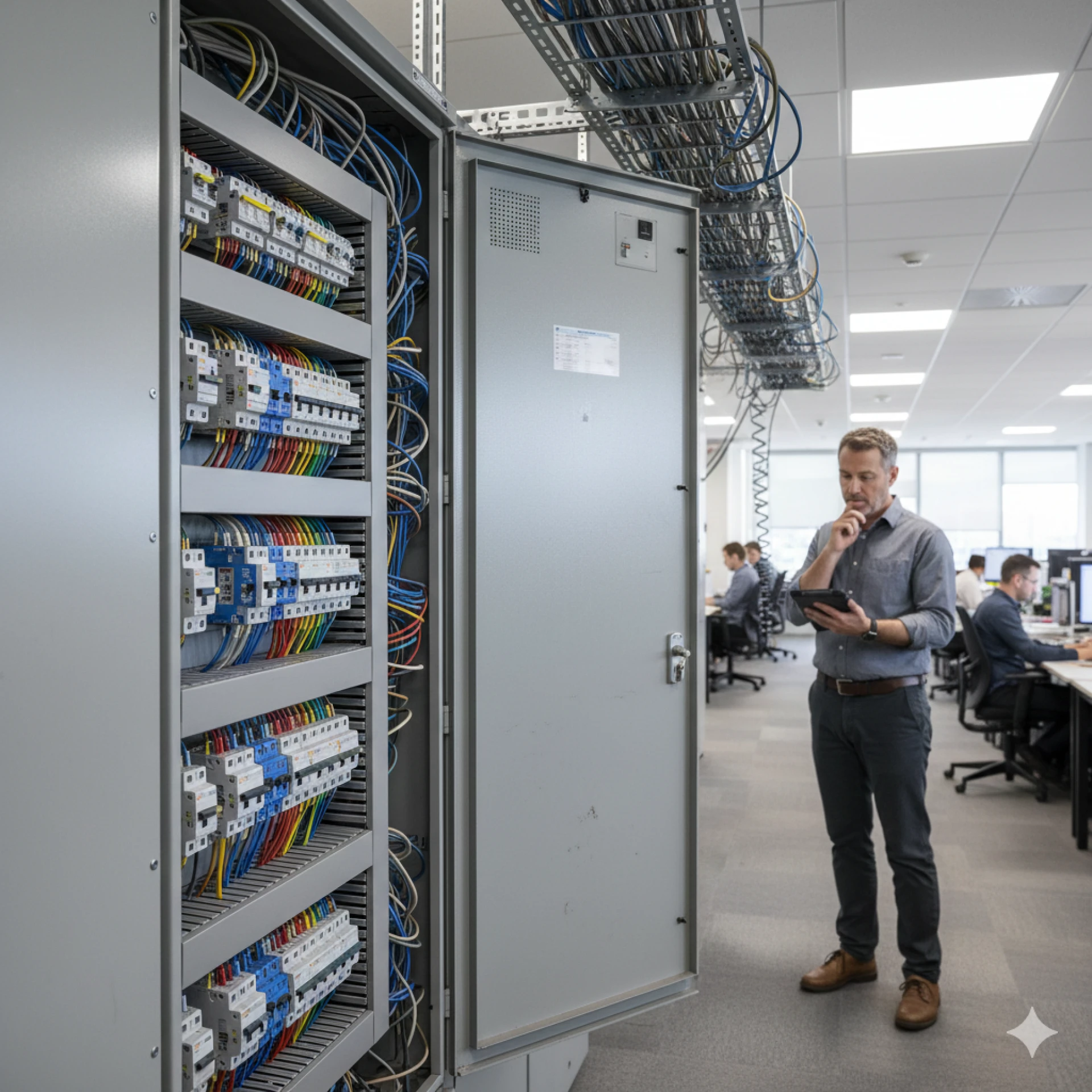
I’ve walked into brand-new offices where the installation looked perfect. Tidy boards. Labelled circuits. Passed inspection.
Then one Monday morning, with full occupancy:
- Half the floor loses power when everyone powers up their workstations
- The server room trips because it was grouped with high-draw outlets
- Emergency circuits fail to operate as intended
All preventable. All due to choices made to save time or cost during installation.
Why Cheap Work Costs More Than It Saves
It’s tempting to save upfront by hiring the lowest bidder. But in commercial buildings, cheap electrical work quickly becomes expensive:
- Frequent call-outs and emergency fixes
- Staff downtime and lost productivity
- Equipment at risk from overloads
- Expensive retrofits or upgrades
- Frustrated tenants or employees
By the time problems appear, the initial savings are gone — and the business pays the real cost.
How Professional Commercial Electricians Prevent This
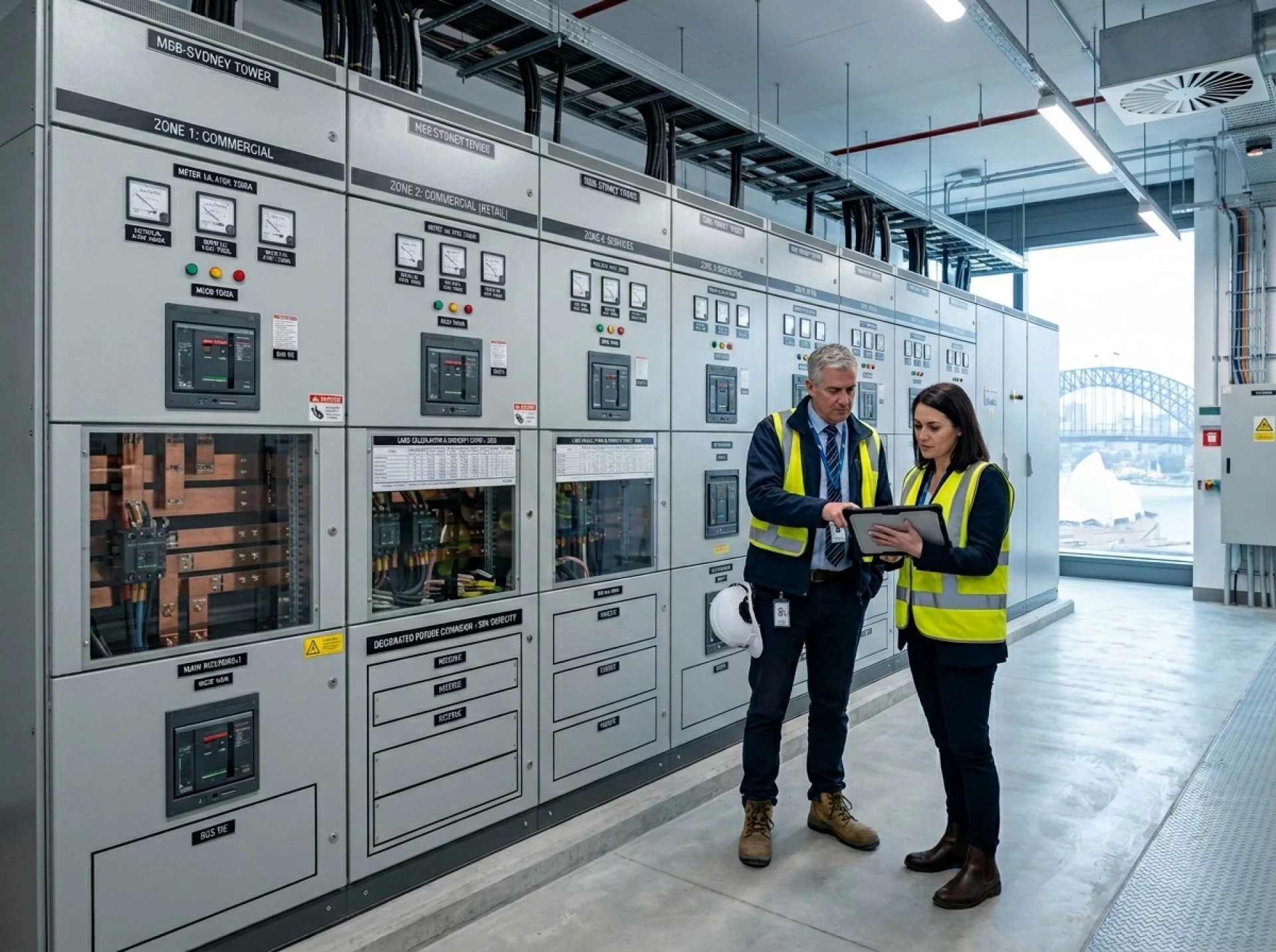
A Commercial Electrician Sydney with proper commercial experience doesn’t just make things look neat. They design for real-world operation, including:
- Accurate load planning and spare capacity
- Logical circuit distribution for peak usage
- Coordination with all trades (HVAC, fire, IT, lighting)
- Critical system redundancy
- Easy-to-maintain layouts for minimal downtime
When it’s done right, problems don’t wait. They rarely exist at all.
Red Flags That Your Work Was Cheap
- Breakers trip under normal load
- Lights flicker during peak hours
- Emergency circuits behave inconsistently
- Maintenance teams struggle to isolate faults
- Retrofits are required within months
If any of these appear, it’s not bad luck. It’s a predictable consequence of corner-cutting.
The Takeaway
Cheap electrical work doesn’t hide forever.
It always reveals itself during business hours — exactly when it costs the most.
If you want a commercial system that works reliably today and tomorrow, you need an electrician who understands the demands of commercial environments, plans for growth, and never sacrifices real performance for short-term savings.
Because in commercial buildings, cutting corners is always more expensive than doing it right the first time.



























Sign in to leave a comment.