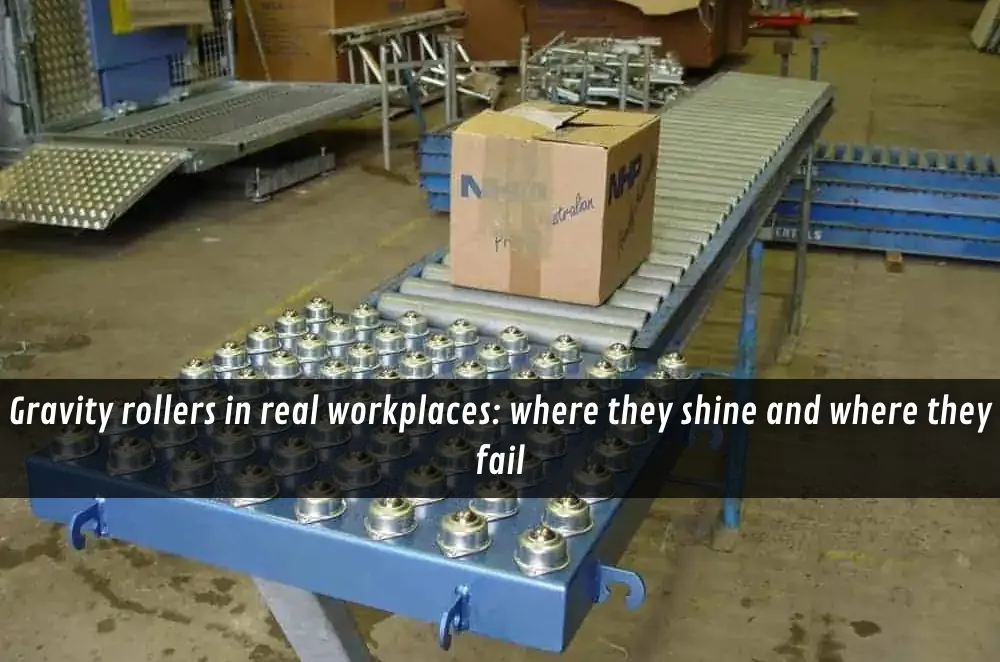

Material flow issues rarely present as a single dramatic breakdown. They show up as slow dispatch lanes, cartons nudged along by hand more often than expected, minor damage near transfer points, or people taking extra steps to “work around” a layout that doesn’t quite match the day’s volume. In Sydney warehouses and industrial sites, where space and access can be constrained, those friction points can add up quickly.
For many operations, improving throughput doesn’t require a fully powered conveyor line. It can start with smart choices around slope, spacing, and stability—so loads move consistently without constant intervention. That’s the thinking behind reliable roller conveyor solutions: systems that behave predictably under everyday conditions, not just during a neat demonstration.
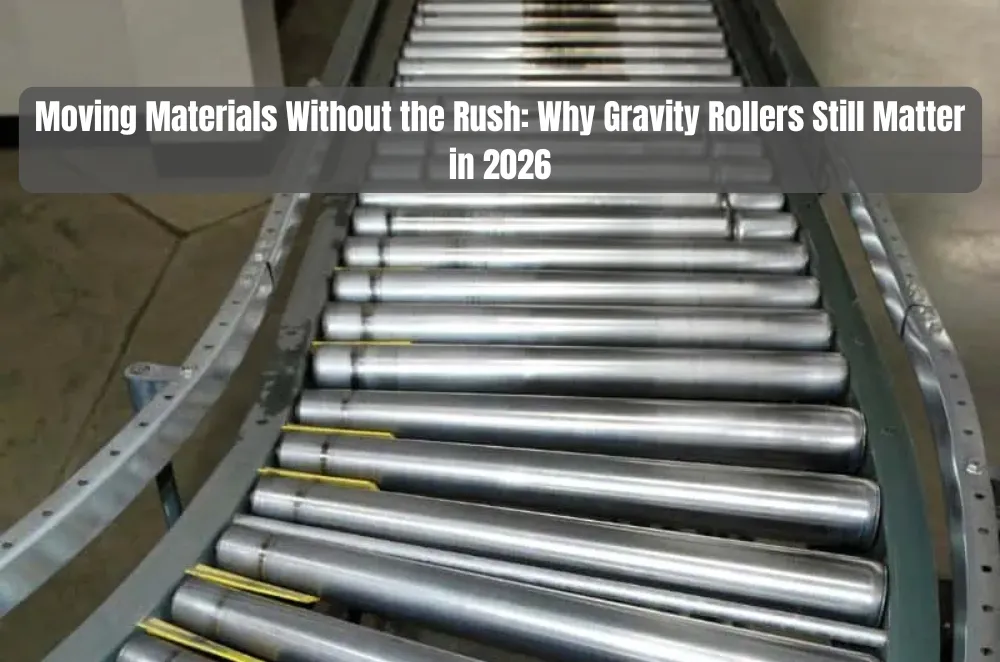
Gravity rollers are a common option in this category because they’re mechanically simple: unpowered rollers mounted in a frame that allow items to move with a gentle push or a slight decline. When they’re specified and set up well, that simplicity can reduce complexity in both use and maintenance. When they’re applied in the wrong context—or set up with “close enough” assumptions—small problems tend to repeat all day.
What “reliable” actually means on the floor
Reliability in roller conveying usually comes down to repeatability:
- Predictable movement: cartons roll without stalling, surging, or creeping sideways.
- Stable tracking: loads stay aligned rather than skewing into side rails.
- Low intervention: operators aren’t constantly rescuing stuck items or resetting the line.
- Consistent transfers: end points and joins don’t become jam hotspots.
A gravity line can look fine in a walkthrough but become unreliable in real use if the slope is wrong for the lightest loads, the rollers are spaced poorly for smaller cartons, or stands shift slightly on uneven slabs.
Where gravity rollers make the most sense
Gravity roller conveyors typically work best when loads are relatively uniform and have stable bases—think cartons, totes, and packaged goods with flat bottoms. They’re often used for short-to-medium transfer between work areas, staging, packing, and dispatch, where the goal is to reduce carrying and keep product moving steadily.
They’re also commonly chosen when teams want:
- Lower mechanical complexity than powered systems
- Modular flexibility for changing layouts
- Simple, quick-to-deploy lanes for peak periods or temporary workflows
In many sites, gravity rollers act as the “connector tissue” between activities—helping people spend more time doing value work and less time walking items around.
Where gravity rollers can struggle
Gravity rollers can become frustrating when the workload doesn’t match what gravity does well. Common mismatch scenarios include:
Very light, irregular, or flexible loads
Light cartons can stall if they don’t have enough weight to overcome friction. Soft bases can sag between rollers and create drag.
Better approach: adjust roller spacing and transitions, or separate those SKUs to a different handling method.
Processes that require timing or controlled speed
If the line needs accumulation logic, consistent speed regardless of slope, or precise merging, gravity may not provide enough control—especially when carton weights vary.
Better approach: use powered zones where control matters, and gravity where it doesn’t.
Tight turns and merges without proper components
Direction changes are where loads skew, rotate, or jam—especially with mixed carton sizes.
Better approach: purpose-built curved sections, guides, and test runs using the smallest and lightest cartons (not the average).
Design details that decide whether it works every day
Most “it keeps jamming” complaints trace back to setup variables that weren’t tuned to the reality of the load mix.
Slope: enough to move, not enough to run away
Too little decline leads to stalls and constant pushing. Too much creates runaway cartons, impacts at end stops, and greater risk at manual handoff points. The usable range depends on weight, carton base material, roller condition, and what happens at the end of the line.
A practical tactic is to tune the slope for your lightest expected carton, then check the heaviest carton doesn’t build too much speed.
Roller spacing: support the smallest carton
If cartons “bridge” poorly, they bounce and drag. If they’re supported consistently, they roll smoothly. Spacing decisions should be driven by the smallest carton footprint you expect to travel that section.
Stands and stability: the quiet culprit
A stable line feels reliable. A line that flexes, creeps, or twists under load will create micro-misalignment that shows up as friction and skew. This is especially relevant on older floors with subtle unevenness, or where lanes are frequently moved and re-leveled.
Transitions and end points: where jams are born
A conveyor run doesn’t end at the last roller—it ends at the first place cartons can collide, pile up, or fall into an awkward transfer. If the end point isn’t controlled, operators will compensate with workarounds that introduce inconsistency and safety risks.
Design the finish like a “landing zone”: a defined stop, a safe transfer surface, and enough room for the next step to keep up.
Common use cases that benefit from gravity rollers
Receiving and container unloading
Where cartons need to move from container to staging quickly, a roller lane can reduce repeated lifting and keep flow steady.
Pick/pack/dispatch lanes
Gravity lanes can move packed cartons out of the work area, reducing walking and congestion around benches.
Temporary rework, returns, or project lanes
If volume spikes or workflows shift, modular gravity sections can create temporary paths without major infrastructure changes.
Kitting and light assembly support
Consistent box sizes moving between steps can be a good match for gravity, especially when the goal is simple transfer rather than precise pacing.
A quick pre-check that prevents most problems
Before committing a layout, pressure-test it with “worst case” realities:
- Test your extremes: smallest, lightest, and most fragile cartons
- Check the floor path: thresholds, joins, and uneven slabs
- Start with conservative slope: increase only as needed
- Plan turns properly: avoid improvised bends
- Control the end: stops and transfer points matter
- Consider the human workflow: access, reach, clearance, and trip risks
If any part of the plan relies on improvisation (“we’ll prop this up” or “just catch the cartons”), reliability tends to degrade quickly.
Key Takeaways
- Gravity roller conveyors can be effective when loads have stable bases and the pathway is designed for consistent movement.
- Reliability is usually determined by slope, spacing, stability, and well-planned transitions.
- Bends, merges, and end-of-line points are common locations for skew and jams if not designed carefully.
- Testing with the smallest and lightest cartons is often the fastest way to uncover issues early.
- A controlled “landing zone” at the end of the run can prevent pile-ups and reduce day-to-day intervention.


























Sign in to leave a comment.