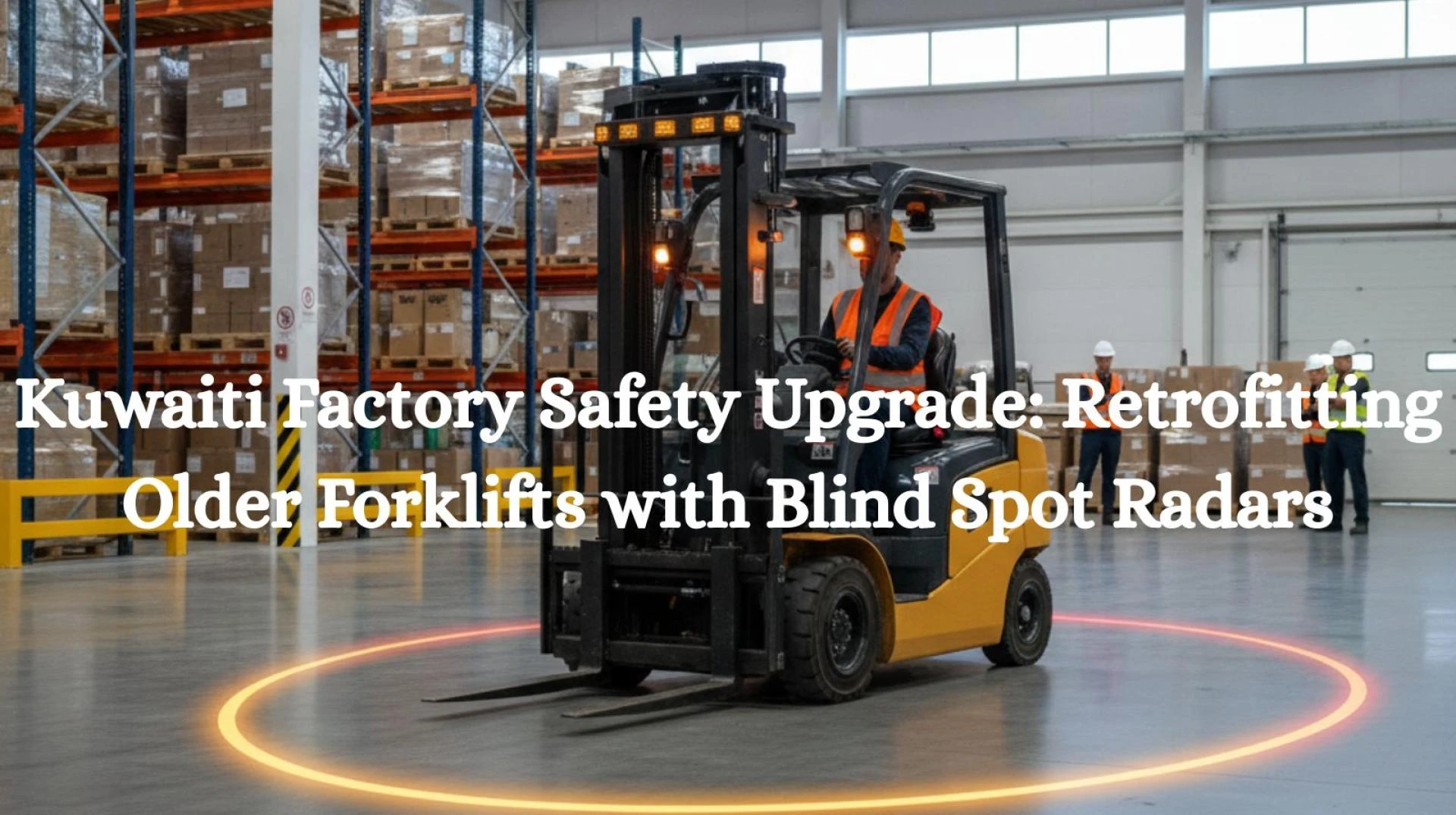
Across Kuwait’s manufacturing sector, a quiet challenge is unfolding.
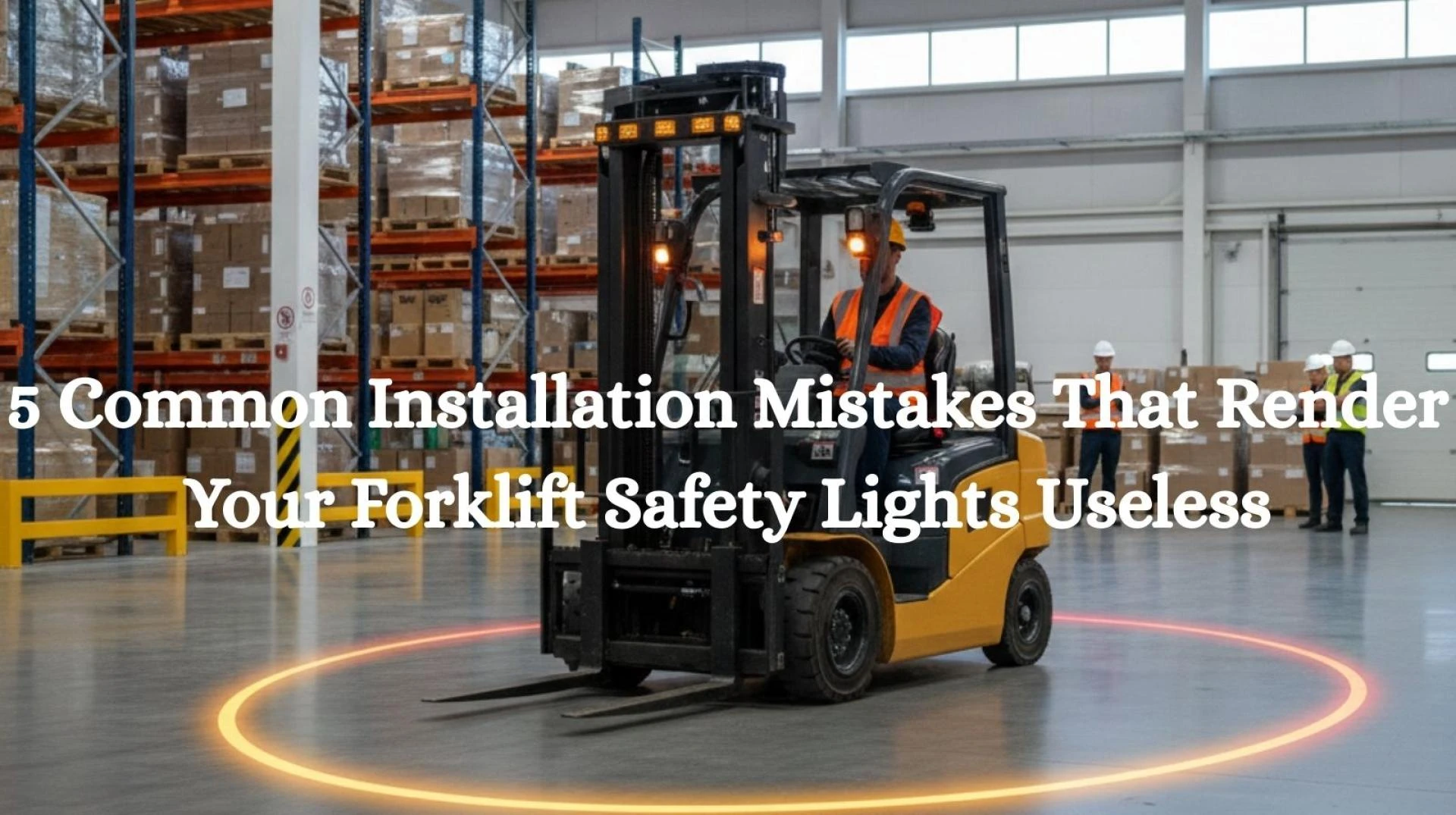
Many factories still operate legacy forklift fleets—machines that are mechanically reliable but lack modern safety technology. In high-risk industrial environments, particularly those linked to petrochemical production, limited visibility combined with dust-heavy conditions creates a persistent hazard.
With over 7,000 monthly searches around forklift blind spot solutions in the GCC region, safety managers are actively exploring retrofit options instead of full fleet replacements.
The good news? You don’t need to buy new forklifts to upgrade safety performance.
Retrofitting radar-based detection systems offers a practical, cost-effective way to modernize legacy fleets while improving compliance, operational efficiency, and worker confidence.
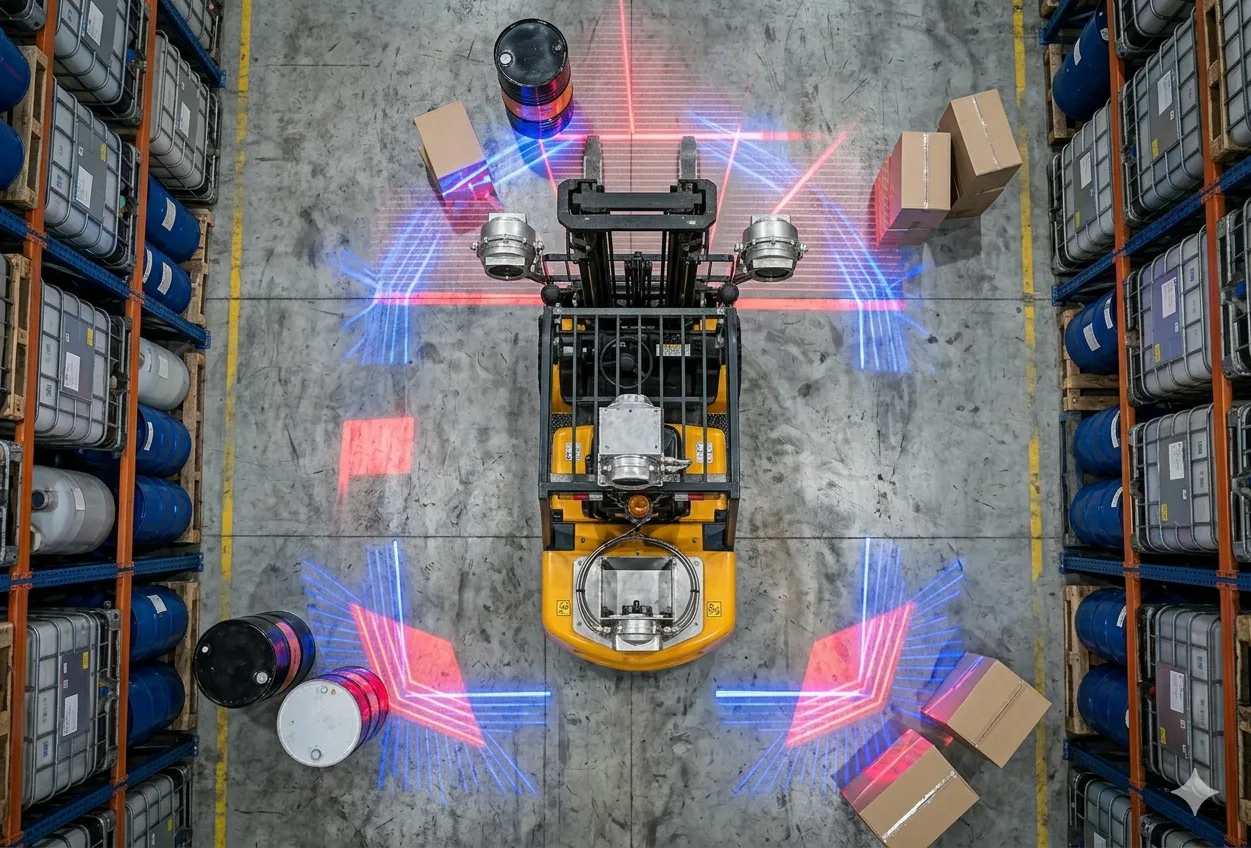
The Blind Spot Problem in Older Forklifts
Older forklifts were not designed for today’s complex factory environments. They often lack:
- Rear and side proximity alerts
- Pedestrian detection systems
- Advanced warning indicators
- Hazard-zone awareness integration
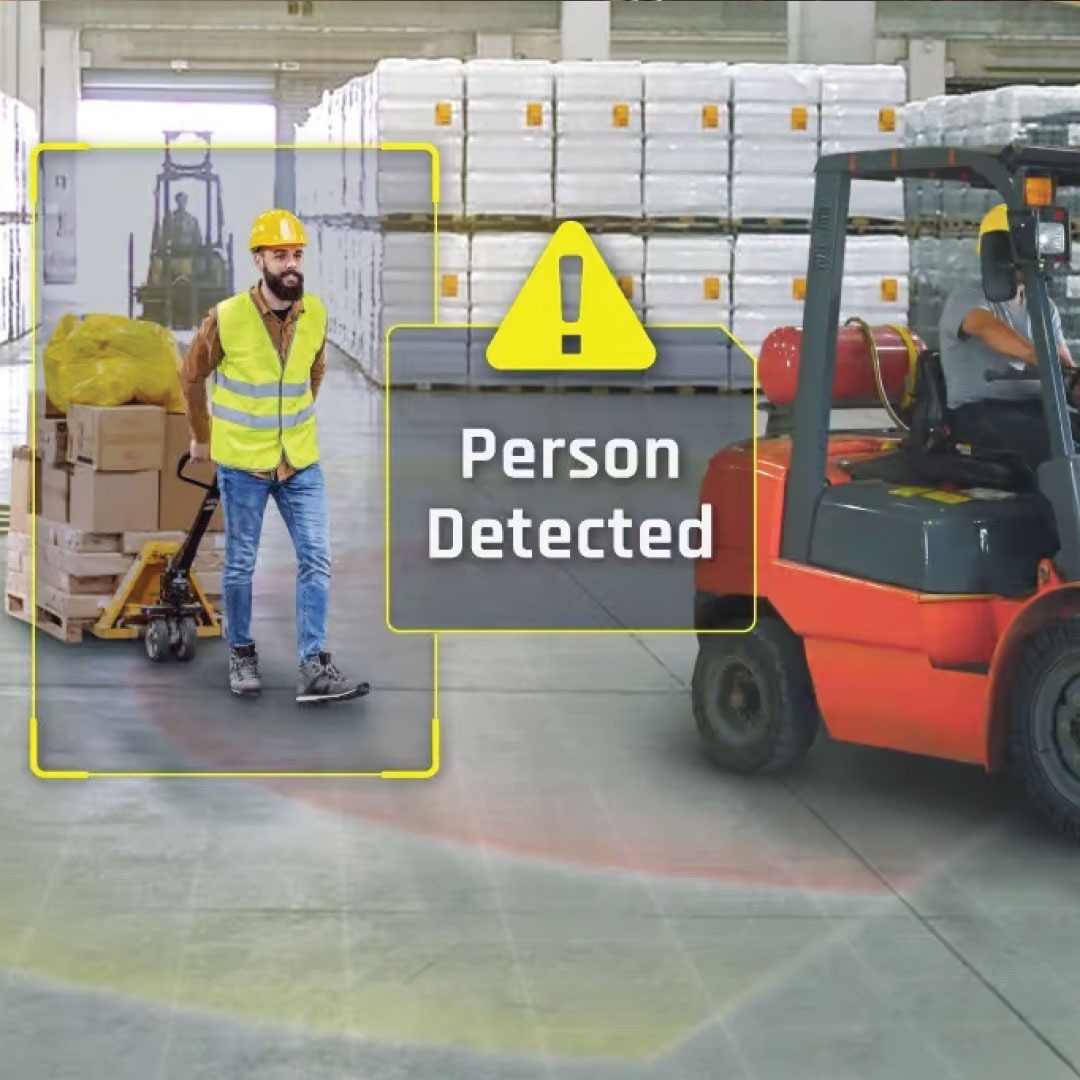
In Kuwait’s manufacturing facilities—where tight aisles, mixed traffic, and high rack storage are common—blind spots remain one of the leading causes of near-miss incidents.
Implementing forklift blind spot detection is no longer a luxury; it is a safety necessity.
Why Retrofitting Makes Financial Sense
Replacing an entire forklift fleet can be capital-intensive. In contrast, installing a forklift blind spot detection system on existing equipment offers a significantly lower upfront investment.
Retrofitting delivers:
- Immediate risk reduction
- Extended lifecycle value for existing forklifts
- Faster ROI compared to full replacement
- Minimal operational downtime
For factories operating 15–40 forklifts, retrofitting allows phased deployment—prioritizing high-traffic units first.
This flexibility is particularly valuable for budget-conscious operations.
Radar vs. Camera in Kuwait’s Dust-Heavy Conditions
Kuwait’s industrial zones frequently contend with:
- Sand infiltration
- Fine airborne dust
- Extreme heat
- Glare-heavy outdoor loading areas
Camera-based systems often struggle under these conditions due to lens obstruction and visibility limitations.
A forklift radar blind spot detection system, however, performs consistently regardless of dust or lighting challenges. Radar waves detect movement through airborne particles, making them highly reliable in desert environments.
This durability makes radar the preferred retrofit choice for Kuwaiti factories.
Simple Installation: Designed for Legacy Equipment
One common concern among factory managers is integration complexity.
Modern retrofit kits are designed for straightforward installation. Typical retrofit steps include:
- Mounting radar sensors on rear and side panels
- Installing an in-cabin visual and audible alert module
- Calibrating detection zones
- Testing sensitivity thresholds
The process typically requires only a few hours per forklift, minimizing disruption to production schedules.
Importantly, systems are modular. Facilities can add expanded coverage zones or integrate with CCTV platforms later if needed.
ATEX Considerations for Petrochemical Facilities
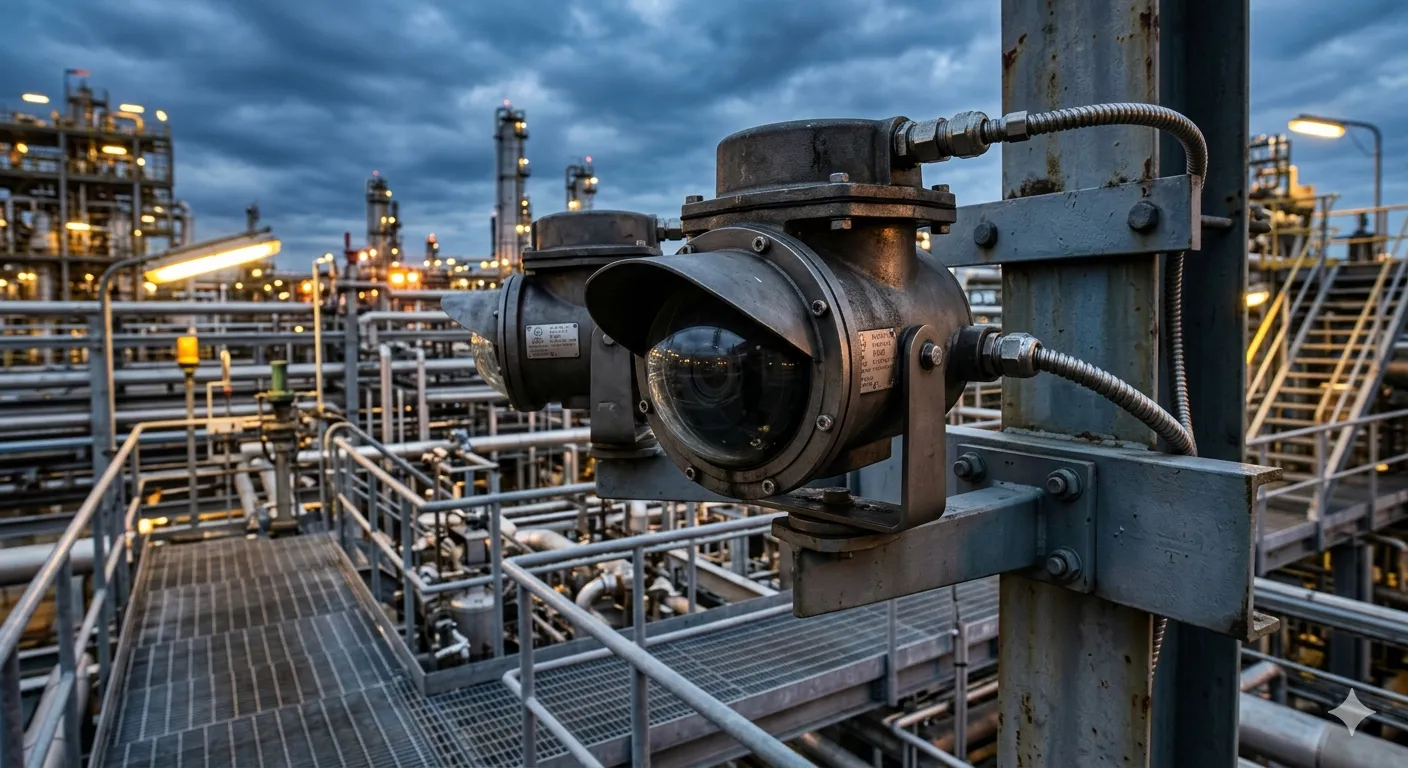
Kuwait’s manufacturing landscape includes significant petrochemical activity. In hazardous zones where flammable vapours or combustible materials are present, equipment must meet explosion-proof standards.
When retrofitting forklifts operating near refineries or chemical storage areas, ATEX compatibility becomes essential.
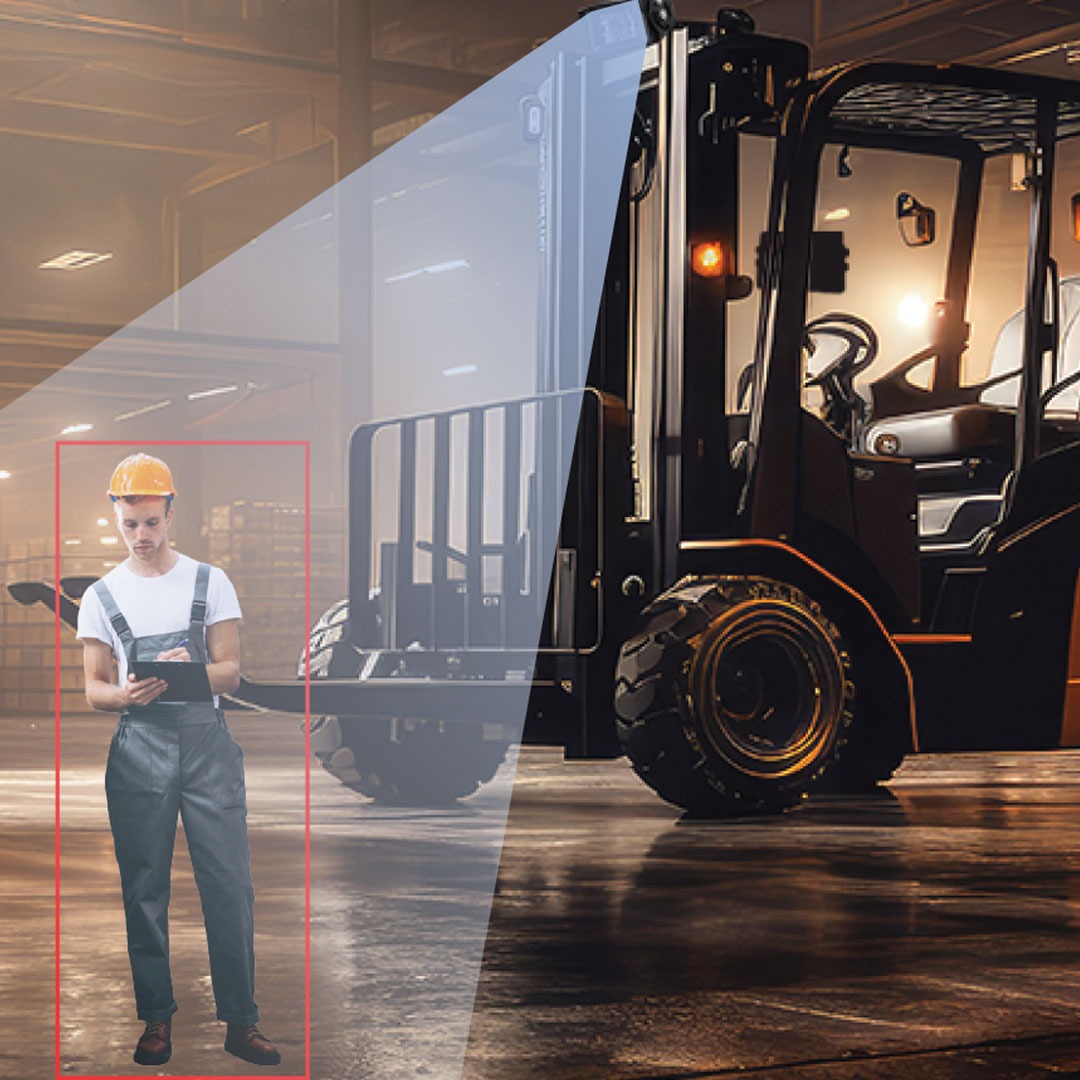
Radar-based detection systems engineered for hazardous environments provide:
- Spark-free operation
- Compliance with industrial safety standards
- Operational continuity in volatile zones
- Cross-border compatibility for GCC trade
This is particularly important for factories supplying oil and gas infrastructure, where regulatory scrutiny is high.
Boosting Operator Confidence and Morale
Safety upgrades are not just technical—they are human.
Operators working in tight factory spaces often experience stress due to limited visibility. Installing forklift blind spot detection technology enhances situational awareness, reducing anxiety and improving maneuvering confidence.
In Gulf installations where radar retrofits were deployed, supervisors reported:
- Improved operator focus
- Reduced hesitation in narrow aisles
- Greater willingness to follow safe driving protocols
- Decreased near-miss reporting within months
One Kuwait-based facility manager noted that after installing radar detection across its main fleet, operators “felt supported by technology rather than solely responsible for blind visibility.”
Confidence translates into performance.
Productivity Gains in High-Traffic Facilities
Safety enhancements often deliver operational efficiency as a by-product.
With radar detection systems:
- Forklifts can navigate more decisively
- Congestion points become safer to manage
- Incident-related downtime decreases
- Workflow interruptions are minimized
In several Gulf manufacturing environments, facilities recorded measurable improvements in loading and material movement speed after retrofitting blind spot systems.
When safety reduces uncertainty, productivity increases naturally.
Future-Proofing Without Replacing the Fleet
Industrial modernization does not always require wholesale equipment replacement.
By retrofitting a forklift blind spot detection system, factories create a safety infrastructure that supports:
- Gradual automation upgrades
- CCTV integration
- Digital safety reporting
- Predictive maintenance platforms
This scalable approach aligns with Kuwait’s broader industrial development strategies, allowing factories to evolve without excessive capital strain.
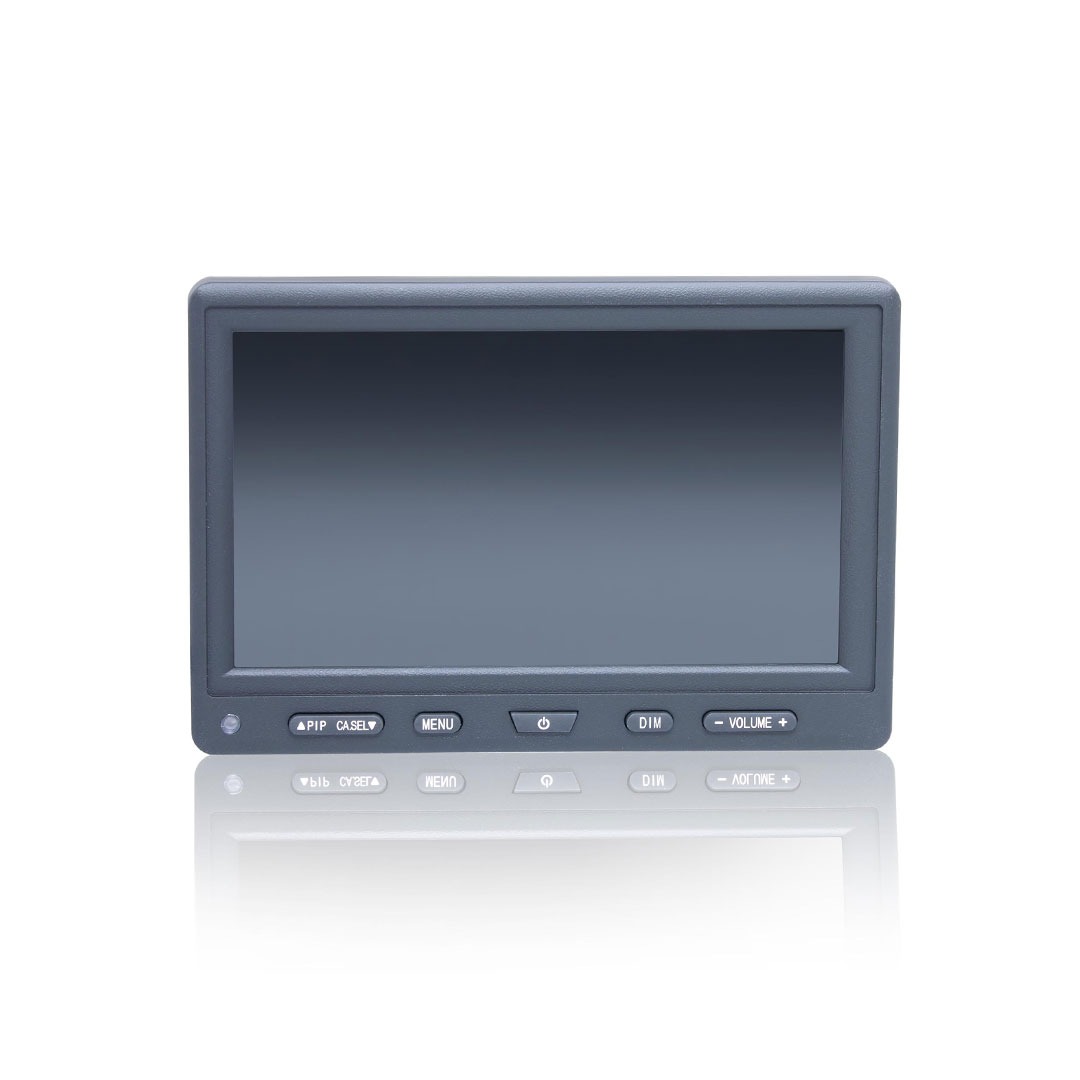
Why Choose SharpEagle for Retrofit Solutions?
SharpEagle specializes in industrial-grade forklift safety solutions engineered for demanding environments across Kuwait, the UAE, and the UK.
Our retrofit solutions offer:
- Durable radar-based detection
- ATEX-certified configurations
- Modular installation options
- Compatibility with legacy forklift models
- On-site technical support and training
We understand the operational realities of Kuwaiti factories—from sand exposure to petrochemical risk zones—and design our systems accordingly.
👉 Contact SharpEagle today to request a tailored retrofit assessment for your forklift fleet and elevate your factory’s safety performance.
Conclusion: Modern Safety for Legacy Fleets
Kuwait’s manufacturing sector is evolving, but many facilities continue to rely on trusted legacy forklifts. Replacing entire fleets may not be practical—but upgrading safety absolutely is.
Radar-based blind spot retrofits provide a cost-effective, reliable, and ATEX-compatible solution for dust-heavy, high-risk industrial environments.
By enhancing visibility, reducing incidents, and improving operator confidence, these systems transform older forklifts into smarter, safer assets.
In a rapidly modernizing industrial landscape, isn’t it time your legacy fleet received a safety upgrade that matches today’s operational demands?




















Sign in to leave a comment.