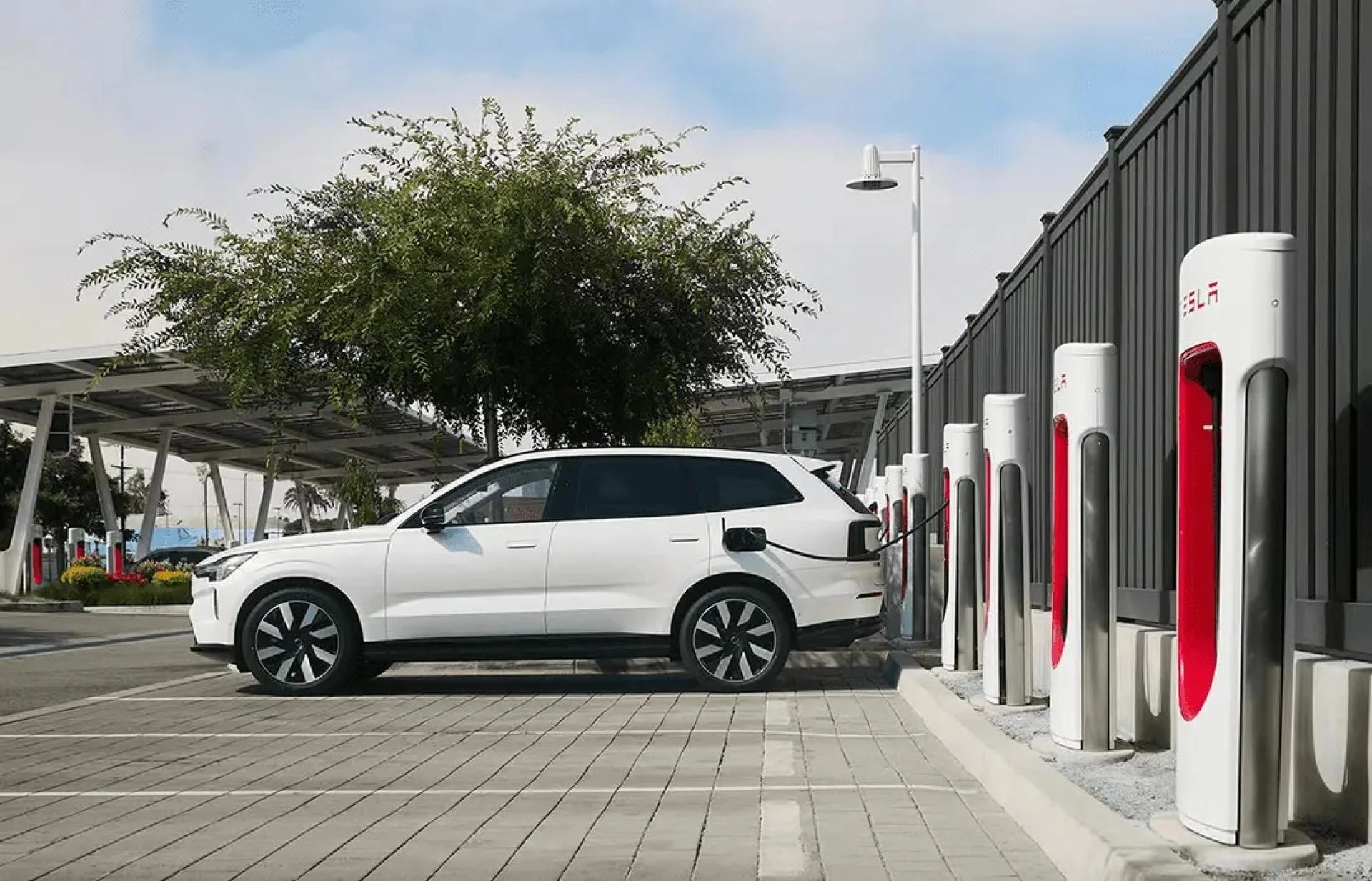

The North American Charging Standard (NACS) has rapidly become one of the most influential developments in the electric vehicle ecosystem. Originally engineered by Tesla to streamline its own charging experience, NACS has evolved into a unifying force across the EV industry. As more automakers and charging networks adopt the standard, NACS is reshaping how drivers power their vehicles and how infrastructure is built across the continent.
As your document notes, Tesla introduced the connector in 2012 as the “Tesla charging connector,” designed to offer a “unified, user-friendly solution for both AC and DC fast charging.”
⚡ What Is the North American Charging Standard?
NACS is a compact, versatile charging interface capable of handling both AC (Level 1 and Level 2) and DC fast charging through a single connector. Tesla rebranded the connector as NACS in 2022 and opened it to the broader industry, a move intended to “facilitate a smoother and more efficient transition to electric vehicles.”
Unlike the Combined Charging System (CCS), which uses separate AC and DC ports, NACS consolidates everything into one streamlined plug. This simplicity is one of the reasons it has gained such rapid traction.
🚗 The Evolution and Industry Adoption of NACS
Tesla’s decision to publish the NACS specifications marked a turning point. In 2023, SAE International announced it would standardize the connector, giving NACS formal recognition and paving the way for widespread adoption.
Major automakers have since committed to integrating NACS ports into future EV models, including:
- Ford
- Rivian
- General Motors (GM)
- Honda
- BMW, Mini, and Rolls‑Royce
- Audi
- Volvo
Your document highlights this shift clearly: “Several major automotive manufacturers have embraced NACS and announced plans to integrate NACS-compatible charging ports into their upcoming EV models.”
This momentum signals a strong industry preference for a unified charging experience—one that reduces fragmentation and improves access to fast, reliable charging.
🔌 Key Advantages of NACS
1. One Connector for All Charging Levels
NACS supports both AC and DC charging, eliminating the need for multiple cables or adapters.
2. Compact, User-Friendly Design
The connector is smaller and lighter than CCS, making it easier to handle and reducing wear on charging ports.
3. Advanced Communication via PLC
NACS uses power-line communication (PLC) to exchange data between the vehicle and charger. This is more efficient than the CAN bus system used by CCS and enables smoother charging interactions.
4. Industry Standardization
With SAE’s involvement, NACS now has a consistent framework for manufacturers and charging networks to follow.
🔧 How NACS Works
Charging with NACS is intentionally simple:
- Connect the NACS fast-charging cable to the adapter Your document describes this step as pressing the cable into the adapter “until it is fully seated.”
- Insert the adapter into the vehicle’s charge port Align and push until fully connected.
- Charging begins automatically The vehicle and charger communicate through PLC to manage power delivery and safety.
This streamlined process reduces user error and speeds up charging sessions.
🔄 NACS vs. CCS: What Sets Them Apart?
NACS
- Single connector for AC + DC
- Smaller, lighter, more ergonomic
- Uses PLC for communication
- Increasingly supported by automakers and networks
CCS
- Separate AC and DC connectors
- Larger and more cumbersome
- Uses CAN bus for communication
- Widely used in Europe but losing ground in North America
Your document summarizes the difference well: “By combining both AC and DC charging in one connector, NACS presents a simpler and more user-friendly solution.”
🔌 Using an NACS Adapter: A Quick Guide
For vehicles not yet equipped with native NACS ports, adapters bridge the gap. The process is straightforward:
- Insert the NACS cable into the adapter
- Align and plug the adapter into the vehicle
- Let the system automatically initiate charging
This ensures compatibility while automakers transition to built‑in NACS ports.
🌐 Why Automakers Are Switching to NACS
The shift toward NACS is driven by:
- Access to Tesla’s extensive Supercharger network
- Simplified charging hardware
- Improved user experience
- Industry momentum and standardization
As your document notes, “This widespread adoption is expected to drive the expansion of NACS-compatible charging stations and infrastructure.”
🚀 The Future of EV Charging in North America
NACS is positioned to become the dominant charging standard across the continent. With support from major automakers, charging networks, and SAE International, the standard promises:
- Greater interoperability
- More reliable fast charging
- Reduced infrastructure complexity
- A smoother transition to electric mobility
Your document concludes that NACS “represents a pivotal moment in the evolution of electric vehicle infrastructure,” and the industry’s rapid adoption strongly supports that view.China manufacturer offers high-quality industrial products with competitive pricing and advanced production capabilities.

























Sign in to leave a comment.