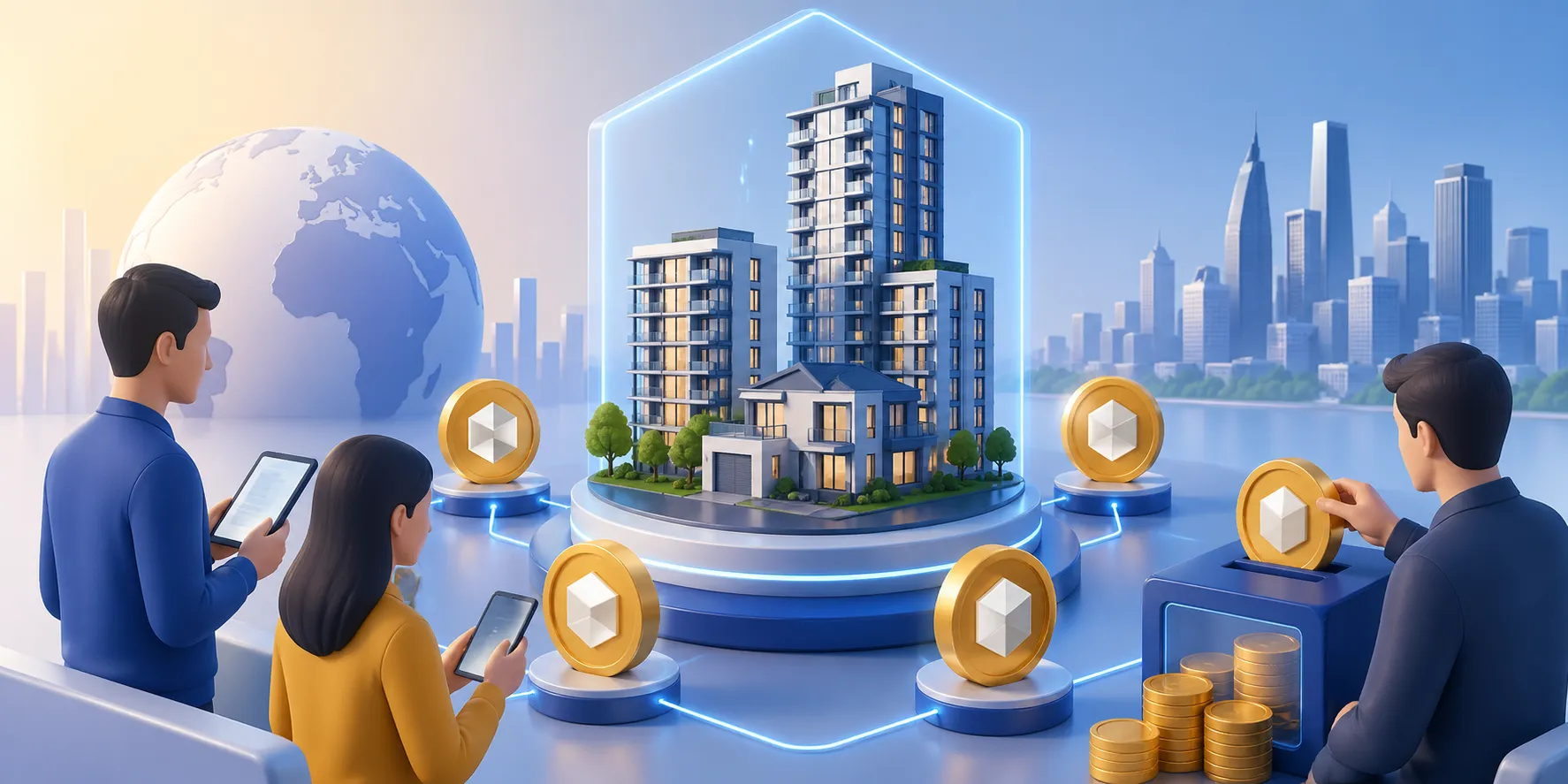

Property investment has long been seen as a space reserved for individuals with large amounts of capital, deep market knowledge, and access to exclusive networks. For small investors, entering real estate often meant dealing with high entry costs, paperwork, and long waiting periods before seeing any returns. In 2026, this pattern is shifting due to the rise of real estate asset tokenization.
This concept allows real estate ownership to be divided into smaller digital units, making it possible for individuals to invest with limited funds. Instead of buying an entire property, investors can purchase fractional ownership in assets such as residential buildings, commercial offices, or rental properties. This shift is attracting a new wave of participants who previously found real estate out of reach.
What Is Real Estate Asset Tokenization?
Real estate asset tokenization refers to the process of converting ownership rights of a property into digital tokens using blockchain technology. Each token represents a share in the property, giving investors partial ownership and, in many cases, a share of the income generated.
These tokens are recorded on a decentralized ledger, which keeps track of ownership and transactions. Unlike traditional property deals that involve multiple intermediaries, tokenization introduces a more direct and digital approach to buying, selling, and managing real estate investments.
For small investors, this means they can participate in markets that were once limited to institutional players or high-net-worth individuals.
Why Small Investors Are Paying Attention in 2026
Several factors are drawing small investors toward real estate asset tokenization. One of the main reasons is affordability. Instead of needing large sums to buy property, investors can start with smaller amounts and still gain exposure to the real estate market.
Another factor is accessibility. Through online platforms, investors can browse available properties, compare options, and invest without geographical restrictions. A person in one country can invest in properties located in another, something that was previously complex and time-consuming.
Liquidity is also improving. Traditional real estate investments often lock funds for long periods. With tokenized assets, investors may have opportunities to sell their tokens on secondary markets, depending on platform rules and regulations.
How Real Estate Tokenization Works
The process of Real Estate Tokenization begins with selecting a property and determining its value. Once the valuation is complete, the asset is divided into multiple digital tokens. Each token represents a fraction of ownership.
A Real Estate Tokenization company typically manages the legal structuring of the asset, ensuring that the tokens are backed by actual ownership rights. After that, the tokens are issued on a blockchain network and made available to investors through a platform.
Investors can then purchase tokens using digital payment methods or traditional currency, depending on the platform. Once purchased, these tokens are stored in digital wallets, and investors can monitor their holdings and returns through dashboards provided by Real Estate Tokenization Services.
Income generated from the property, such as rent, is distributed among token holders based on their share. This creates a passive income opportunity without the need for direct property management.
Methods of Real Estate Asset Tokenization
Direct Ownership Tokenization
In this method, tokens represent direct ownership of a property. Investors hold legal rights proportional to the number of tokens they own. This approach provides a clear link between the token and the underlying asset.
Indirect Ownership Through SPVs
Special Purpose Vehicles (SPVs) are often used to hold property assets. Investors purchase tokens that represent shares in the SPV, which in turn owns the property. This method simplifies legal processes and is commonly used by a Real Estate Tokenization Development company.
Debt-Based Tokenization
Instead of owning a portion of the property, investors can hold tokens representing loans provided to property developers or owners. Returns come in the form of interest payments rather than rental income.
Hybrid Models
Some platforms combine ownership and debt structures, offering a mix of rental income and fixed returns. These models aim to balance risk and reward for small investors.
Role of Technology in Tokenization
Blockchain plays a central role in real estate asset tokenization. It records transactions in a secure and immutable manner, reducing the chances of fraud or disputes.
Smart contracts are another important component. These are self-executing programs that handle processes such as income distribution, ownership transfers, and compliance checks. By automating these tasks, the system reduces the need for manual intervention.
Real Estate Tokenization Platform Development focuses on creating user-friendly interfaces where investors can interact with tokenized assets. These platforms include features such as investment tracking, performance analytics, and transaction history.
Benefits for Small Investors
One of the biggest advantages is the ability to diversify investments. Instead of putting all funds into a single property, investors can spread their capital across multiple assets in different locations and sectors.
Lower entry barriers also make it easier for beginners to start investing. Even individuals with limited knowledge can participate by selecting properties listed on trusted platforms.
Another benefit is reduced management responsibility. Investors do not need to handle maintenance, tenant issues, or property taxes directly. These tasks are managed by professionals associated with the platform or asset.
Real estate asset tokenization also introduces faster transaction processes. Buying or selling tokens can take minutes or hours, compared to weeks or months in traditional real estate deals.
Risks and Considerations
While the concept offers many advantages, it is not without risks. Regulatory uncertainty is one of the main concerns. Different countries have varying rules regarding digital assets and property ownership, which can affect how tokenized investments operate.
Market volatility is another factor. The value of tokens may fluctuate based on property performance, market conditions, and investor demand.
Platform reliability also matters. Investors need to choose platforms backed by experienced Real Estate Tokenization Development Services providers to avoid technical or operational issues.
Security is another area to consider. Although blockchain itself is secure, digital wallets and platforms can be vulnerable if not properly protected.
Choosing the Right Platform
Selecting the right platform is crucial for small investors. A reliable Real Estate Tokenization company should provide clear information about properties, legal structures, and expected returns.
Transparency in fees and operations is important. Investors should understand how much they are paying for services and how returns are calculated.
User experience also plays a role. Platforms developed through professional real estate tokenization development processes usually offer better navigation, reporting tools, and customer support.
Investors should also check whether the platform supports secondary trading, as this affects liquidity and exit options.
Real Estate Tokenization Development in 2026
The field of real estate tokenization development is expanding rapidly in 2026. Companies are focusing on improving platform usability, integrating compliance tools, and supporting cross-border investments.
Real Estate Tokenization Development Services now include features such as identity verification, automated reporting, and integration with financial systems. These additions make it easier for platforms to meet regulatory requirements while offering a smoother experience for users.
A Real Estate Tokenization Development company may also work on creating sector-specific platforms, such as those focused on residential properties, commercial spaces, or hospitality assets.
Use Cases Across Property Types
Real estate asset tokenization is not limited to one type of property. Residential buildings are among the most common assets, offering rental income to token holders.
Commercial properties such as office spaces and retail outlets are also popular, as they often provide stable long-term leases.
Hospitality properties, including hotels and resorts, are being tokenized to allow investors to benefit from tourism-related income.
Even land parcels are being included, giving investors the opportunity to participate in future development projects.
Regulatory Developments
Governments and regulatory bodies are gradually addressing the rise of tokenized assets. In 2026, several regions have introduced frameworks to govern real estate tokenization.
These regulations focus on investor protection, anti-money laundering measures, and compliance with property laws. While this adds complexity, it also provides a level of trust for participants.
Real Estate Tokenization Services providers often include compliance support to help platforms meet these requirements.
Future Outlook
The future of real estate asset tokenization looks promising for small investors. As technology improves and regulations become clearer, more people are likely to participate in tokenized property markets.
Institutional interest is also growing, which could lead to increased market stability and more investment opportunities. As more assets are tokenized, investors will have a wider range of choices across different regions and property types.
At the same time, education will play an important role. Understanding how tokenized investments work, along with their risks and benefits, will help investors make informed decisions.
Conclusion
Real estate asset tokenization in 2026 is opening new doors for small investors who were previously excluded from property markets. By dividing ownership into digital tokens, it reduces entry barriers and offers a more flexible way to invest in real estate.
Through the efforts of Real Estate Tokenization company providers, improved real estate tokenization development practices, and growing Real Estate Tokenization Development Services, the ecosystem continues to expand. With proper research and careful platform selection, small investors can participate in real estate markets with greater ease than ever before.
While challenges remain, the concept is gaining traction and reshaping how property investments are approached. For those willing to understand the process and manage risks, real estate asset tokenization presents a new path into one of the world’s most established asset classes.
























Sign in to leave a comment.