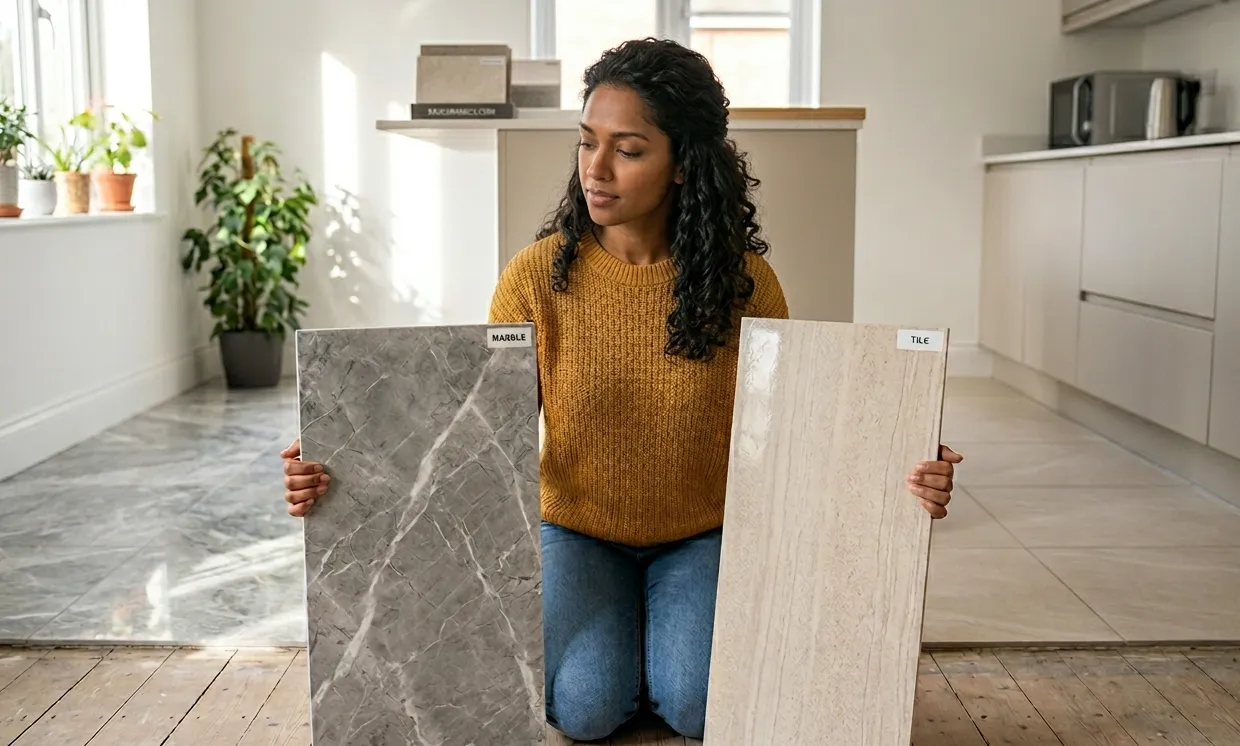

Stepping into your first home is an incredible milestone, but it quickly drops you into a whirlwind of decision-making. Among the biggest choices you'll face is deciding what goes underfoot. Your flooring sets the entire tone for your space, and for most new homeowners, the debate quickly boils down to two heavyweights: Modern Vitrified/Ceramic Tiles and Natural Marble. At Raj Ceramics, we look at material science daily; while our global footprint is rooted as an elite Exporter and Manufacturer of Refractory Solutions, our deep expertise in high-temperature minerals gives us a unique, technical perspective on what makes residential surfaces durable, practical, and beautiful.
It is easy to get swept away by glossy interior design magazines, but your flooring needs to survive real life spilled coffee, muddy paws, dragged furniture, and heavy foot traffic. Let’s break down the economics and daily realities of tiles versus marble so you can make a choice you’ll love for decades.
1. The Aesthetic Battle: Unique Luxury vs. Uniform Perfection
Before diving into the numbers, let's look at the visual character of both materials.
- Natural Marble: Marble is a living, geological masterpiece. Because it is quarried straight from the earth, no two slabs are ever identical. It offers an opulent, seamless look with natural veining that instantly elevates a room's status. It screams timeless luxury.
- Engineered Tiles: Modern ceramic and porcelain tiles are marvels of digital printing technology. Today, you can buy high-quality tiles that mimic Italian marble, hardwood, or industrial concrete so perfectly that guests won't know the difference. They offer perfect uniformity in color and pattern, giving you complete control over the final look.
2. The Cost Breakdown: Upfront vs. Hidden Expenses
For a first-time homeowner, budgeting is everything. When comparing costs, you have to look past the price tag on the material itself and factor in installation and finishing.
| Financial Factor | Ceramic / Vitrified Tiles | Natural Marble |
| Material Cost | Budget-friendly to moderate. Predictable pricing per square foot. | Can range from moderate (local marble) to exceptionally high (imported Italian). |
| Installation Speed | Fast. Pre-cut, uniform sizes mean a room can be finished in a couple of days. | Slow. Slabs must be carefully cut, matched, and laid by highly skilled artisans. |
| Finishing Costs | Zero. Tiles come pre-polished and glazed straight from the factory. | High. Marble requires extensive multi-step diamond polishing and sealing after installation. |
The Verdict on Cost: Tiles are significantly cheaper upfront and drastically less expensive to install. Marble is a premium, long-term financial investment.
3. The Maintenance Reality: Easy Care vs. High Maintenance
This is where real life hits hard. How much time do you actually want to spend worrying about your floors?
The "Carefree" Nature of Tiles
Tiles are practically bulletproof when it comes to daily life. Because they are fired at incredibly high temperatures, their surface is completely vitrified (glass-like) and non-porous.
- Stain Resistance: Spilled red wine, turmeric, or lemon juice? Just wipe it up. It won't sink in.
- Chemical Resistance: You can use standard household disinfectants without worrying about ruining the finish.
The "Delicate Elegance" of Marble
Marble is a metamorphic rock composed primarily of calcium carbonate. This means it is highly porous and chemically reactive.
- The Acid Enemy: Acidic substances like vinegar, lemon juice, or even a dropped slice of tomato can cause "etching" a chemical reaction that permanently dulls the polished surface.
- Porosity: If a liquid spill sits on marble for too long, it will seep deep into the stone, leaving a permanent shadow or stain.
Periodic Sealing: To protect marble, you must apply a chemical sealer every 1 to 2 years to keep the pores closed.
4. Longevity: A Lifetime vs. Evolving Trends
- Marble Wins on Longevity: If properly maintained, marble can literally last centuries. If it gets scratched or loses its shine after ten years, you can simply grind it down and re-polish it to look brand new. It adds permanent resale value to your home.
- Tiles Win on Flexibility: High-quality porcelain tiles will easily last 15 to 20 years. However, if a tile cracks because something incredibly heavy was dropped on it, replacing a single tile can be tricky if you didn't save a spare box from the exact same manufacturing batch.
Summary: Which is Right for You?
Choose Tiles if you want a budget-friendly, highly durable, low-maintenance floor that stands up to kids, pets, and messy cooking without requiring a second thought.
Choose Marble if you have the budget, view your home as a legacy property, and are willing to invest the time and money into regular polishing and sealing to preserve an irreplaceable, natural work of art.
Final Thoughts
Your first home should be a source of joy, not a source of constant maintenance anxiety. Whichever path you choose, understanding the core material science ensures you won't be blindsided by unexpected upkeep down the line. At Raj Ceramics, our legacy as a world-class Exporter and Manufacturer of Refractory Solutions has taught us that every material has its perfect purpose. Choose the flooring that aligns with your daily lifestyle, embrace the beauty of your new space, and welcome home!





























Sign in to leave a comment.