
Here is the honest truth about car launches that the automotive industry rarely says out loud.
The people you most want to impress at a launch event — the journalists, the influencers, the early adopters — cannot all get inside the car. Not at a premium event. Not without chaos. Not in a way that gives every person the same considered, controlled experience the brand has spent months designing.
So most brands settle. They do a walk-around. They show a video. They hand out a brochure with the specs and let people form their own impressions from whatever they could see through a glass partition.
And then they wonder why press coverage tends to be surface-level.
This is the problem that virtual reality software development — when done with real craft — eliminates completely.
What Maruti Suzuki Did at Comic Con (And Why It Worked So Well)
Comic Con is not your usual automotive venue. It is India's premier pop-culture celebration — cosplayers, comic fans, people who dress up as their favourite characters and spend a weekend in a world that is deliberately more vivid and more interesting than ordinary life.
When Maruti Suzuki came to Comic Con as the title sponsor, they had a dual challenge. They needed to unveil two cars — the Celerio and the Brezza — in a way that felt native to the event. A standard showroom-style display would have been completely out of place. This crowd was not going to queue up politely to peer through a car window.
IIC Lab, working with Communique Marketing, built something different. Two distinct experiences, each designed for the specific personality of the car it was showcasing.
The Celerio Experience — Hyper-Personalised Projection Mapping
For the Celerio, the solution was projection mapping — and the execution was genuinely clever.
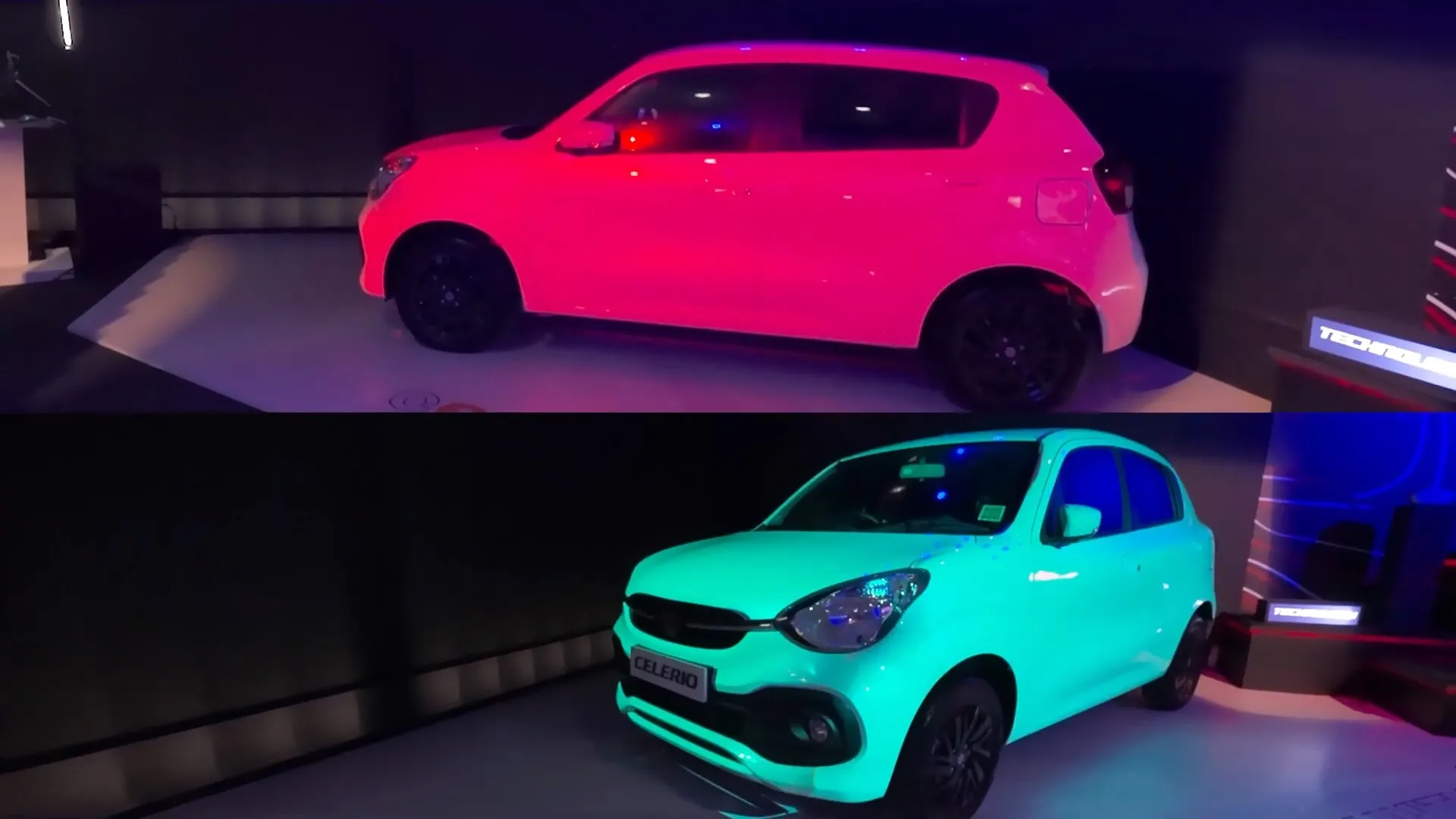
A camera and screen setup was positioned near the car. Fans walked up, the camera captured their outfit, and the software analysed it to identify the dominant primary and secondary colours they were wearing.
Then — and this is the part that made people stop and pull out their phones — those exact colours were used to generate a personalised animation pattern, which was then projected live onto the Celerio's bodywork.
Five unique animation patterns were built, each visually distinct and designed to work with the bold, saturated aesthetic of a Comic Con crowd. The car essentially became a canvas that reflected the personality of whoever was standing in front of it.
This is important from a brand strategy perspective. The Celerio is a car aimed at younger buyers — people who want something that feels like theirs, not just a commodity they drive. Letting those buyers literally paint the car in their own colours was not just a cool trick. It was a product truth, communicated experientially.
The Brezza Experience — Virtual Reality in a Futuristic City
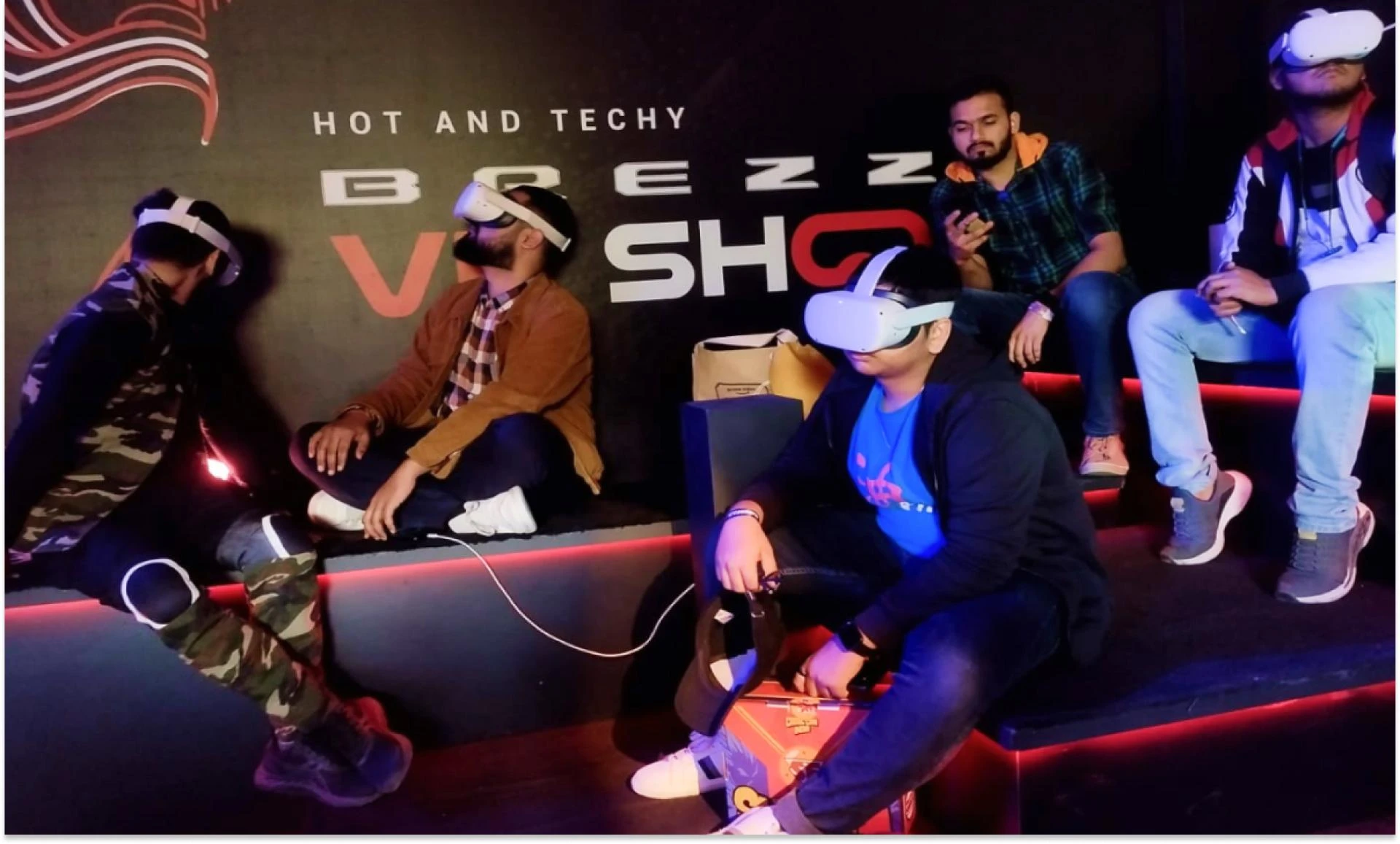
For the Brezza, the experience went deeper. IIC Lab built a complete virtual reality environment — a futuristic, neon-lit metropolitan city — and placed users inside the car, driving through it.
The setup facilitated 10 people simultaneously in the VR experience, rotating continuously across the three days of the event. Every detail of the Brezza was recreated inside the virtual environment: steering wheel, speedometer display, sunroof, headlights, interior layout — all rendered to match the real car as closely as possible.
This is where virtual reality software development matters beyond the headset. A generic city background with a car model dropped into it is not an experience — it is a demo. What IIC Lab built was a world designed specifically to showcase what makes the Brezza distinctive. The futuristic city aesthetic was not chosen at random. It matched the car's identity: modern, urban, slightly aspirational.
What 15,000 Interactions in 3 Days Tells You
The combined results across both experiences were striking.
Over 15,000 interactions were recorded across the three days — at a pop-culture event where Maruti was competing for attention with everything from celebrity signings to gaming halls to cosplay competitions.
Those numbers do not happen because VR is novel. They happen because people saw something that was worth their time — something that connected to why they were there and gave them something to talk about afterward.
That is the bar that good virtual reality services clear, and that basic activations rarely reach.
The Technical Realities Worth Understanding
A few things about this project that deserve to be said plainly, because they matter when you are briefing a virtual reality development company:
Environment matters as much as hardware. The Brezza's futuristic city was not decoration. It was the vehicle for the message. The environment had to look expensive, feel consistent, and load without noticeable lag across 10 simultaneous headsets.
Personalisation requires real software architecture. The projection mapping system for the Celerio was not a single static animation. It was a live analysis-to-projection pipeline — camera input, colour extraction, pattern generation, projection calibration — running in real time, in a busy event environment, repeatedly across thousands of visitors.
Scale is not just about numbers. Getting 10 people into VR simultaneously at Comic Con and delivering a coherent experience across all of them required infrastructure planning, not just content creation.
The Question Worth Asking Your Agency
When you brief a virtual reality development company for an automotive activation, the question to ask is not "can you do VR?"
Almost anyone can do VR.
The question is: "Can you build an environment where a person who has never sat in our car walks away knowing, at a gut level, exactly what kind of car it is?"
If the answer is yes, and they can show you they have done it before — you have found the right partner.
Inkincap has done it for Maruti Suzuki, for Toyota, for some of the most-watched car launches in India. If your next launch deserves to be felt, not just seen, talk to them.
Start a project conversation



















Sign in to leave a comment.