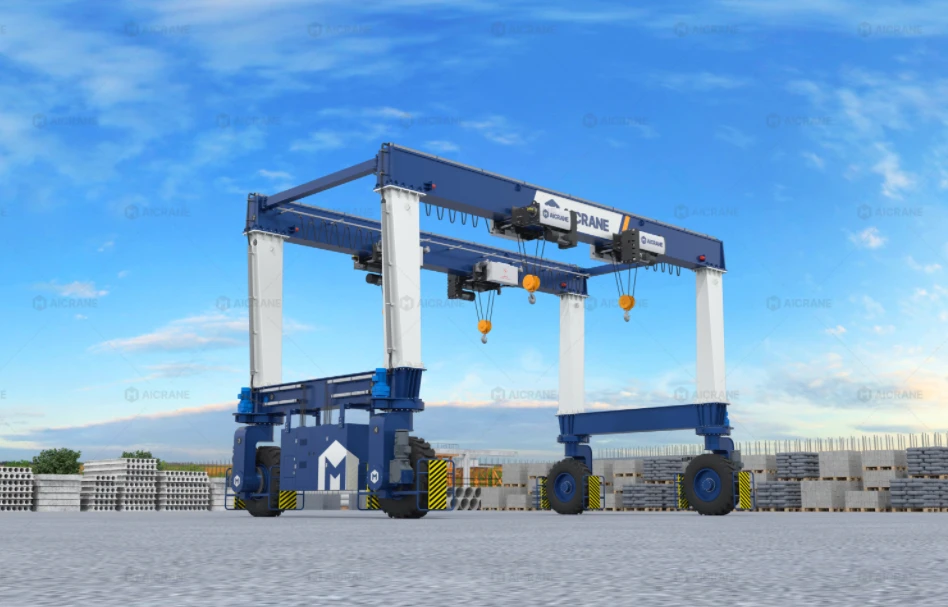

Rubber Tyred Gantry (RTG) cranes are critical assets in modern logistics, container terminals, and industrial storage yards due to their high mobility and versatility. Unlike Rail Mounted Gantry (RMG) cranes, RTG cranes rely on rubber tyres for movement, allowing them to operate on paved or compacted surfaces without the limitations of fixed rails. One of the key factors determining the performance, stability, and efficiency of RTG cranes is their wheel arrangement configuration. The design of the wheel system not only affects mobility but also impacts load distribution, turning radius, operational safety, and ground pressure. This article delves into the different wheel arrangement configurations used in RTG cranes, their advantages, challenges, and application considerations.
Understanding Wheel Arrangement in RTG Cranes
The wheel arrangement of an RTG crane refers to the number, positioning, and steering mechanism of the tyres supporting the crane’s structure. These cranes are typically large, spanning 20 to 60 meters or more, with lifting capacities ranging from 30 tons to over 100 tons. Proper wheel arrangement ensures the crane can move safely and efficiently under full load conditions while maintaining stability and minimizing wear on tyres and yard surfaces.
Key factors influenced by wheel arrangement include:
- Load Distribution – Proper tyre positioning ensures uniform weight distribution to prevent excessive stress on certain tyres or ground surfaces.
- Turning Radius – The configuration determines how sharply the crane can maneuver, particularly in congested container yards.
- Ground Pressure – The arrangement affects the contact area of tyres with the ground, impacting surface wear and operability on soft or uneven surfaces.
- Stability – The support layout helps resist tipping when handling heavy containers or loads at extended reaches.
Common Wheel Arrangement Configurations
RTG cranes typically use one of the following wheel arrangements:
1. Four-Wheel Configuration
The four-wheel configuration is the simplest arrangement, usually found in smaller RTG cranes or light-duty applications. This layout consists of one tyre at each corner of the crane.
Advantages:
- Simple design and lower manufacturing costs.
- Easier to maintain, with fewer moving parts.
- Lightweight, suitable for smaller loads.
Challenges:
- Limited load capacity due to fewer contact points.
- Reduced stability, especially under high or uneven loads.
- Wider turning radius, which may limit maneuverability in tight spaces.
This configuration is often used in smaller storage yards or facilities where the crane does not need to handle very heavy containers.
2. Six-Wheel Configuration
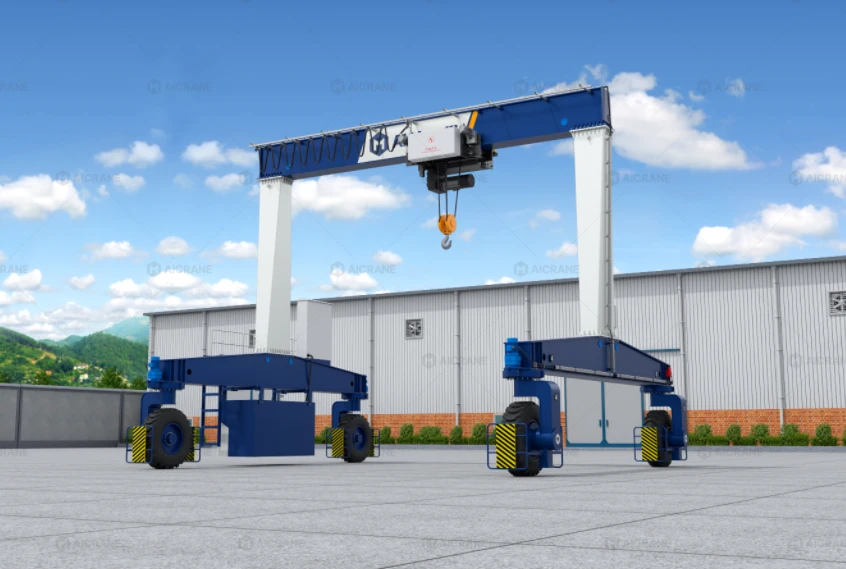
A six-wheel layout adds two additional tyres, typically located along the crane’s sides. This provides extra stability and distributes the load more evenly across the surface.
Advantages:
- Enhanced stability compared to four-wheel configurations.
- Better load distribution, reducing tyre wear and ground pressure.
- Moderate improvement in turning and mobility.
Challenges:
- Slightly more complex steering and maintenance requirements.
- May still be insufficient for extremely heavy or wide-span RTG cranes.
Six-wheel arrangements are common in medium-duty RTG cranes, balancing operational efficiency and cost.
3. Eight-Wheel Configuration
Eight-wheel configurations are widely used in standard RTG cranes with spans between 30 and 50 meters. This configuration provides four tyres on each side of the crane.
Advantages:
- Superior load distribution for larger cranes.
- Improved stability, even with full-height stacked containers.
- Reduced ground pressure, minimizing damage to yard surfaces.
Challenges:
- Increased complexity in steering mechanisms, often requiring synchronized or electronic controls.
- Higher initial cost due to more components.
- Maintenance becomes more demanding with additional tyres and steering systems.
Eight-wheel arrangements represent a practical compromise between performance and cost for standard container handling RTG cranes.
4. Twelve-Wheel or Multi-Wheel Configurations
For heavy-duty rubber tyred gantry cranes, especially those with very large spans or high lifting capacities (50–100 tons), twelve-wheel or even more extensive arrangements are used. These configurations may include multiple tyres on each side and across the crane’s width, with independent drive and steering systems.
Advantages:
- Excellent load distribution for extremely heavy containers.
- Maximum stability for tall stacks and long spans.
- Lower ground pressure, suitable for soft or uneven surfaces.
- Multi-directional mobility possible with advanced steering systems.
Challenges:
- Complex design requiring advanced steering controls.
- Higher maintenance and operational costs.
- Larger turning radius if steering is not fully synchronized.
These multi-wheel arrangements are essential for major container terminals, large industrial yards, or applications requiring high safety margins and continuous operation under heavy loads.
Steering Mechanisms and Wheel Coordination
The efficiency of a wheel arrangement is closely linked to its steering system. Common steering configurations include:
- Two-Wheel Steering – Only the front or rear tyres are steerable. Suitable for small RTGs with simple turning requirements.
- Four-Wheel Steering – Both front and rear tyres are steerable, improving maneuverability.
- All-Wheel Steering – Each tyre can be independently steered, allowing crab movements, diagonal travel, and minimal turning radius. This is common in large, modern RTG cranes.
- Crab Steering Mode – Allows the entire crane to move sideways, useful for precise container alignment.
Advanced RTG cranes use electronic steering systems to synchronize multiple wheels, enhancing stability during travel and heavy lifting operations.
Factors Affecting Wheel Arrangement Selection
Choosing the optimal wheel configuration requires consideration of several factors:
- Crane Span and Load Capacity – Larger spans and heavier loads require more tyres for stability.
- Yard Surface Conditions – Soft or uneven surfaces benefit from more wheels to reduce ground pressure.
- Operational Environment – Confined or crowded yards may prioritize smaller turning radius and all-wheel steering.
- Maintenance and Cost Considerations – More wheels increase maintenance complexity and cost, so a balance must be struck between performance and budget.
- Mobility Requirements – Cranes requiring frequent lateral movement or crab mode travel may need all-wheel independent steering.
Conclusion
The wheel arrangement configuration of Rubber Tyred Gantry cranes is a fundamental design consideration that directly impacts mobility, stability, load handling, and operational efficiency. From simple four-wheel setups for light-duty applications to sophisticated twelve-wheel arrangements for heavy-duty, large-span cranes, each configuration offers unique advantages and challenges. Steering systems, load distribution, and ground conditions must be carefully considered when selecting a wheel arrangement to ensure safe and efficient RTG operations.
Properly designed wheel configurations not only improve crane mobility but also extend tyre life, reduce maintenance costs, and optimize operational productivity. As container yards and industrial storage areas continue to grow in scale and complexity, understanding and implementing the right wheel arrangement for RTG cranes has never been more critical. For operators seeking high-performance, reliable, and versatile RTG cranes, attention to wheel arrangement is an investment in long-term efficiency and safety.













![The Benefits of Using a CNC Touch Probe [Infographic]](https://writeupcafe.com/data/post/1677697/bfdf3e040e67936848aa232d2dfe3d03.jpg.webp)












Sign in to leave a comment.