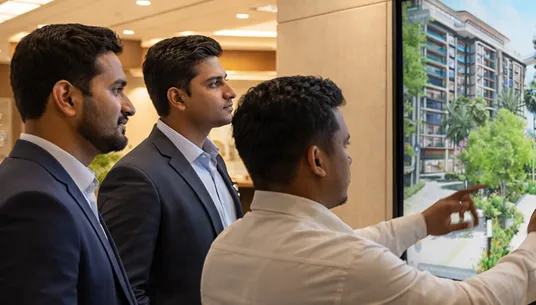

Two developers. Two different projects. Two very different buyer audiences. And one problem sitting right at the centre of both: how do you sell a home that does not exist yet, to a buyer who needs to feel certain before they sign?
3D visualization for real estate has been around long enough that most people in the industry have an opinion about it. Some see it as a marketing layer — something you put on the website to look credible. Others understand it as a sales infrastructure tool — something you build your entire experience centre around.
L&T and Ma Sarada chose the second approach. Here is why that choice made the difference.
Two Projects, One Sales Problem — And Why Static Formats Were Failing
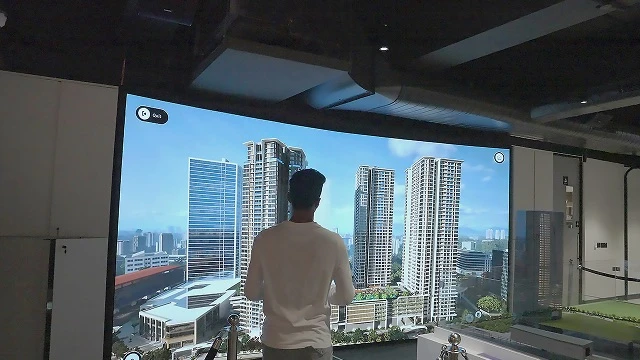
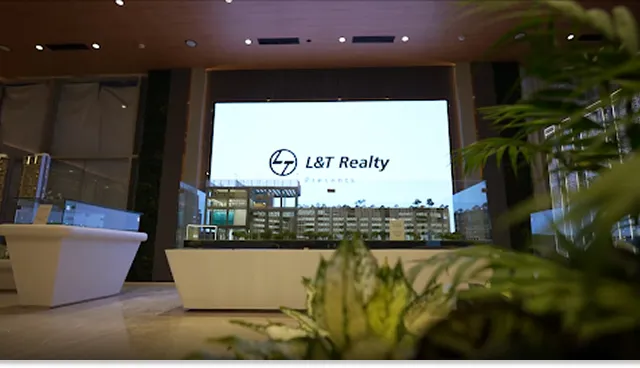
The L&T Bengaluru experience centre was dealing with volume. On launch weekends, footfall crossed 200 visitors in a single day — families, professionals, investors, NRI buyers. The physical setup of the centre could not handle the demand without creating bottlenecks. Staff were stretched. The experience felt rushed. And a buyer who feels rushed does not buy.
Ma Sarada's challenge was different in texture but the same in root cause. The township project needed buyers to develop a spatial and emotional understanding of a development that spanned multiple phases and would take years to complete. A single site visit — to a plot of land with construction markings — was not delivering that understanding.
Both teams came to the same conclusion independently: the information the buyer needed, in the form they needed it, could not be delivered through conventional means. Brochures provide data but not experience — a buyer reads about 1,800 sq ft but cannot feel it. Scale models show form but not life. Render boards work for architects and developers but overwhelm buyers who are not trained to read them. On-site visits during construction create confusion, not clarity.
The missing piece in both projects was not more information. It was a format that translated information into experience — at the place where the sale happens.
How V-Estate's 3D Visualization Real Estate Software Worked Across Both Sites
At L&T: Managing Footfall Without Losing Quality
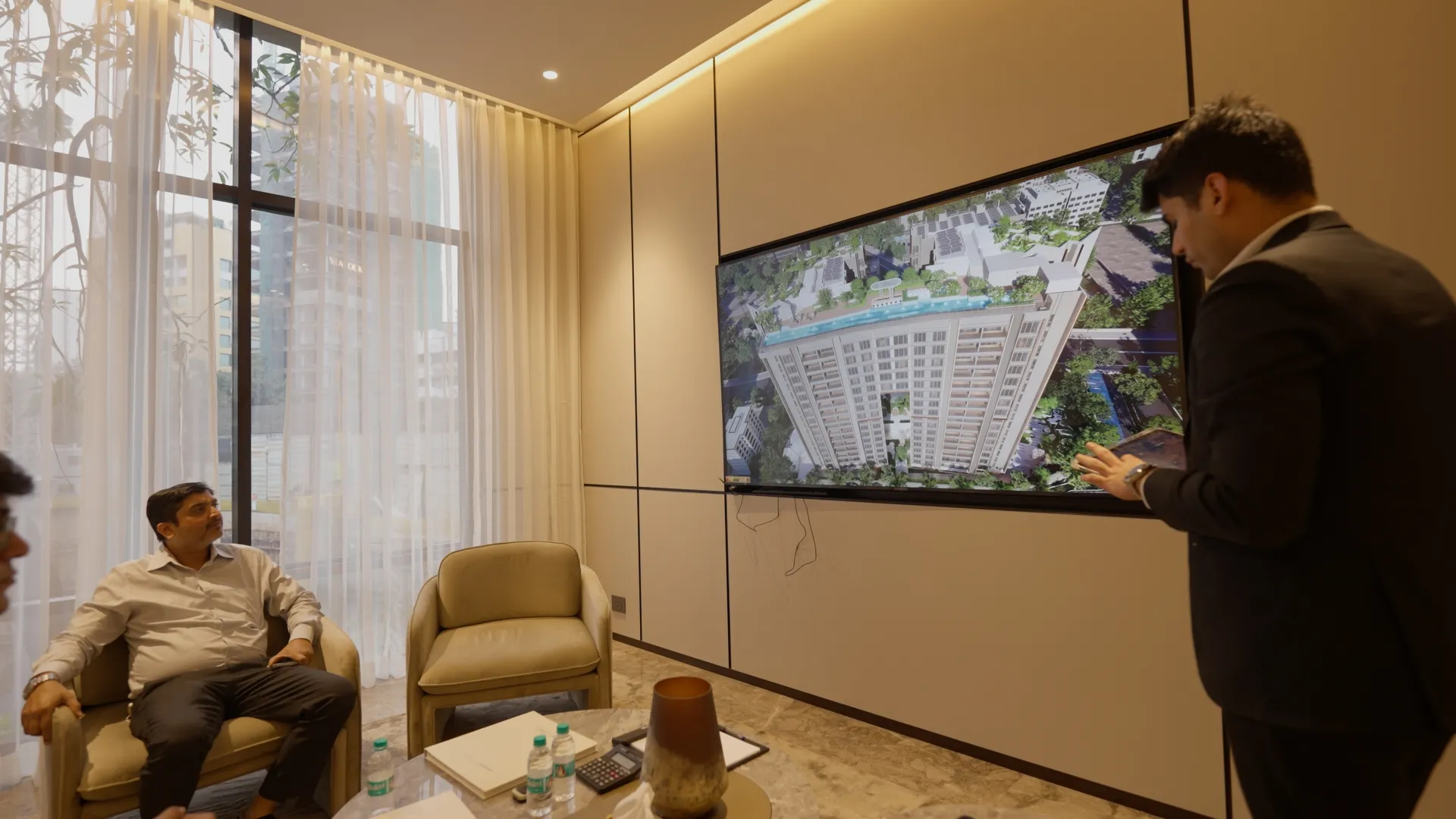
V-Estate built the L&T centre around a structured visitor journey. The platform opens with a project overview — the site, the towers, the master plan — which a visitor can interact with independently. Even during peak footfall, buyers could begin orienting themselves without waiting for a sales team member. The vicinity mapping pulled in connectivity data so location questions answered themselves before they were asked. Sales staff, when they engaged, were meeting buyers who already had a foundation of understanding.
The interior unit view — the dollhouse walkthrough — became the most emotionally significant part of the experience. Families spent the most time here. It is the moment the project stops being abstract and starts being home.
At Ma Sarada: Building Confidence in an Unbuilt Vision
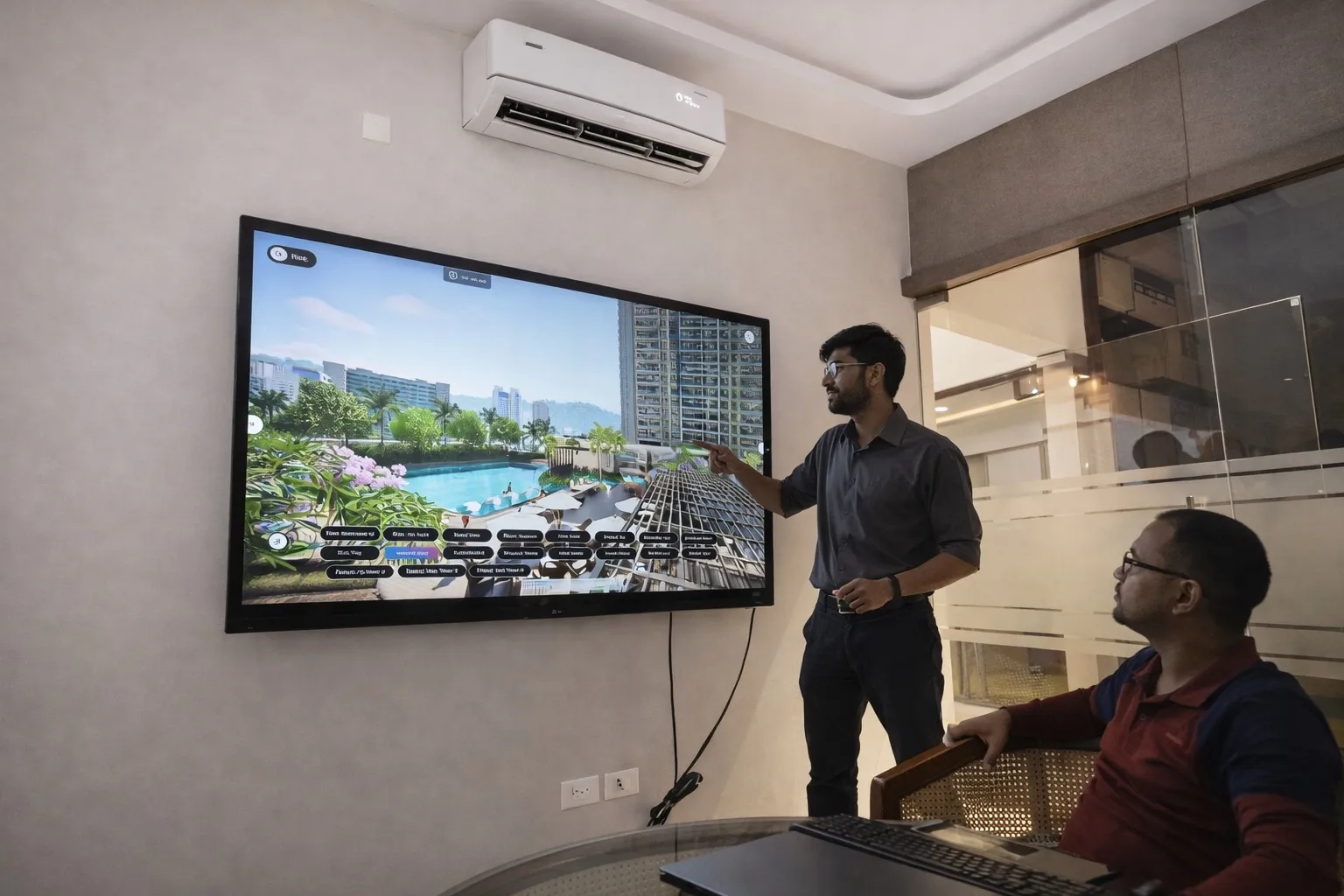
The digital twin deployed at Ma Sarada worked differently because the project demanded it. V-Estate built a navigable replica of the entire development that buyers could explore in their own sequence. An investor focused on phasing could move through the master plan timeline. A family focused on lifestyle could spend their time in the amenity zones and green corridors. The platform adapted to what each buyer was actually evaluating — without the sales team having to manually redirect the conversation.
The Shared Architecture of a High-Converting Experience Centre
What both centres had in common was not the technology. It was the principle behind how the technology was deployed.
V-Estate built both centres around a layered disclosure model — the idea that buyers process information best when it moves from broad to specific, from context to detail. You show them the city, then the neighbourhood, then the project, then the amenities, then the flat. Each layer builds emotional investment before the next one arrives.
This is how good storytelling works. And 3D visualization for real estate, when deployed well, is storytelling at architectural scale. Buyers who understand location before they see the flat make faster decisions. Buyers who explore amenities before they see the price have higher emotional investment. Buyers who walk through their potential unit before the sales conversation begins are already past the hardest objection — 'I can't picture it.'
Technology that changes outcomes is never the most visible thing in the room. It is the thing that makes everything else in the room work better.
V-Estate powers some of India's most sophisticated real estate experience centres. If your next launch deserves a sales environment that works as hard as your team, start the conversation at V-Estate.























Sign in to leave a comment.