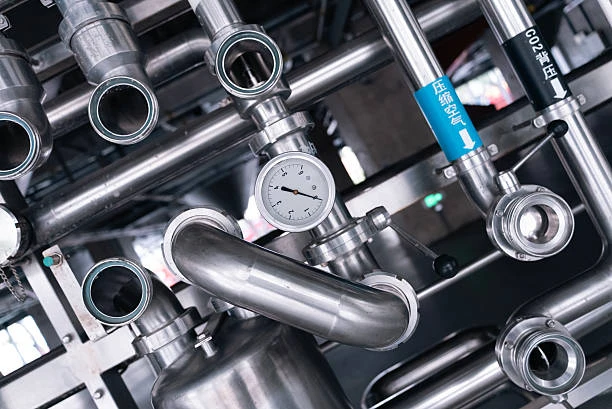

Modern fuel delivery systems are designed to maintain stable pressure under a wide range of operating conditions. Yet many drivers, technicians, and engineers notice that the Fuel Pressure Gauge can spike noticeably during hard acceleration. This behavior often raises concerns about regulator failure, sensor error, or pump malfunction. In reality, pressure spikes during acceleration are usually the result of predictable mechanical and fluid-dynamic interactions within the fuel system. Understanding these interactions requires examining how fuel demand, pump response, regulation, and transient engine conditions work together.
Understanding Fuel Pressure Fundamentals
Fuel Pressure as a Controlled Variable
Fuel pressure is not a static value. It is a controlled variable maintained within a defined range to ensure proper fuel atomization and air–fuel ratio. Whether in carbureted, port fuel–injected, or direct-injection systems, pressure must rise or fall in response to engine load and demand.
A Fuel Pressure Gauge reflects this dynamic environment. During steady cruising, pressure tends to remain stable because fuel demand changes slowly. During acceleration, however, demand rises rapidly, and the system briefly overshoots before stabilizing.
Acceleration as a Transient Condition
Acceleration is a transient operating condition, meaning it occurs faster than many mechanical and hydraulic systems can instantly adapt. Fuel systems are designed to respond quickly, but not instantaneously. This delay between demand and regulation is one of the main reasons pressure spikes appear on a gauge.
Transient Fuel Demand and Pump Response
Rapid Increase in Injector Flow
When the throttle opens suddenly, the engine control system commands injectors to deliver more fuel immediately. Injector pulse width increases within milliseconds, dramatically increasing fuel flow demand. The fuel pump responds by increasing output to prevent pressure from dropping.
Because electric fuel pumps are designed to err on the side of excess capacity, they often momentarily deliver more fuel than required. This causes pressure to rise briefly before the regulator corrects it.
Pump Inertia and Overcompensation
Electric fuel pumps have mechanical inertia. When commanded to deliver more flow, they do not modulate output with perfect precision in real time. Instead, they ramp up quickly and may overshoot the required flow rate.
This overshoot is visible as a pressure spike on the Fuel Pressure Gauge, particularly during aggressive acceleration. Once the regulator bleeds off excess pressure or pump control stabilizes, the gauge returns to its nominal value.
Fuel Pressure Regulator Dynamics
Regulator Reaction Time
Fuel pressure regulators, whether vacuum-referenced mechanical units or electronically controlled valves, require a finite amount of time to respond. During sudden acceleration, manifold pressure changes faster than the regulator can fully compensate.
In vacuum-referenced systems, throttle opening reduces manifold vacuum. This change signals the regulator to increase fuel pressure, but the mechanical diaphragm and spring system reacts with a slight delay. The result is a brief pressure spike before equilibrium is restored.
Electronic Regulation and Control Lag
In modern returnless fuel systems, pressure is controlled electronically through pump speed modulation. Sensors detect pressure changes and relay data to the engine control unit, which then adjusts pump output.
Even in these advanced systems, sensor sampling rates and control algorithms introduce minor delays. During acceleration, the system may briefly overshoot the target pressure as it prioritizes preventing lean conditions.
Fluid Dynamics and Line Effects
Fuel Line Compression and Elasticity
Fuel is technically incompressible, but fuel lines, hoses, and seals are not. Under sudden increases in pump output, flexible components expand slightly, storing energy like a spring. When flow stabilizes, this stored energy can release back into the system, creating momentary pressure fluctuations.
These effects are more noticeable in systems with long fuel lines or older rubber hoses. The Fuel Pressure Gauge captures these transient changes even though they may last only fractions of a second.
Pressure Wave Reflection
Rapid changes in flow create pressure waves that travel through the fuel system. These waves can reflect off closed injectors, regulators, or dead-end sections of line. During acceleration, increased injector activity and pump output amplify these waves.
The resulting oscillations can register as spikes on a gauge, particularly analog gauges that respond quickly to pressure changes.
Engine Load and Combustion Demands
Enrichment Strategies During Acceleration
Engines often require temporary fuel enrichment during acceleration to prevent hesitation or knock. Carbureted engines use accelerator pumps, while fuel-injected engines rely on transient enrichment maps.
This enrichment demands higher instantaneous fuel delivery. The fuel system responds aggressively, sometimes overshooting pressure targets to ensure sufficient supply. The Fuel Pressure Gauge reflects this intentional behavior rather than a fault.
Protection Against Lean Conditions
From an engineering perspective, a brief pressure spike is safer than a pressure drop. Lean mixtures during acceleration can cause detonation, misfire, or engine damage. For this reason, fuel systems are tuned conservatively.
The gauge spike indicates that the system is prioritizing engine protection and performance, even if pressure briefly exceeds nominal values.
Measurement and Gauge Characteristics
Mechanical Gauge Sensitivity
Not all pressure spikes originate solely from the fuel system. Mechanical gauges are highly sensitive to vibration and pulsation. During acceleration, engine vibration increases, which can exaggerate needle movement.
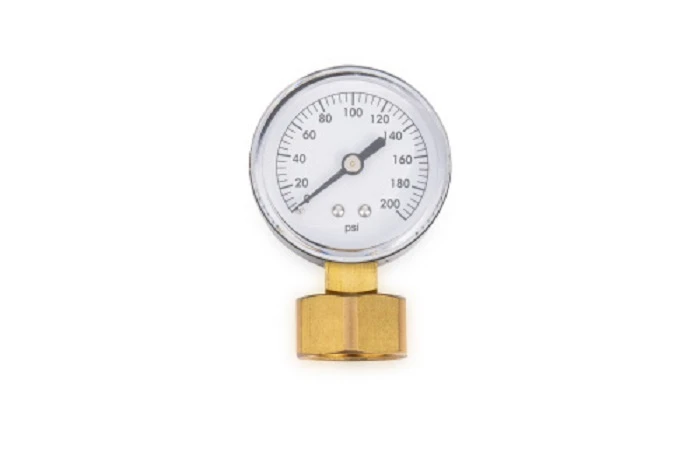
A Fuel Pressure Gauge mounted directly on the fuel rail may display sharper spikes than one damped by a snubber or isolator. The spike may appear dramatic on the gauge while actual pressure variation remains within acceptable limits.
Sensor Placement and Resolution
Gauge readings depend heavily on where pressure is measured. Pressure near the pump, rail, or regulator can vary slightly due to flow resistance and timing differences. During acceleration, these differences become more pronounced.
High-resolution electronic sensors may show brief spikes that are invisible to the engine control system, which averages readings over time.
System Design Differences
Return Versus Returnless Systems
Return-style fuel systems allow excess fuel to flow back to the tank, making pressure control more forgiving. During acceleration, excess pump output can quickly return to the tank, reducing spike duration.
Returnless systems rely on precise pump control and have less immediate pressure relief. As a result, pressure spikes may be sharper but shorter-lived.
Performance and Modified Systems
High-performance or modified vehicles often exhibit more pronounced pressure spikes. Upgraded pumps, larger injectors, or aftermarket regulators may not be perfectly matched.
In these cases, acceleration-induced spikes on the Fuel Pressure Gauge can indicate excess pump capacity or mismatched components rather than a malfunction.
When Pressure Spikes Indicate a Problem
Abnormal Spike Magnitude or Duration
While brief spikes are normal, excessive or sustained pressure increases may indicate regulator failure, restricted return lines, or control system errors. If pressure remains elevated after acceleration ends, further inspection is warranted.
Symptoms Accompanying Spikes
Pressure spikes accompanied by rough running, fuel odor, or poor fuel economy may suggest a fault. In contrast, isolated spikes during acceleration with normal drivability usually indicate healthy system response.
Understanding context is critical before diagnosing a problem based solely on gauge behavior.
Conclusion: Why Spikes Are Often Normal
A Fuel Pressure Gauge spike during acceleration is typically the result of rapid fuel demand, pump overcompensation, regulator response time, and fluid dynamics within the fuel system. These spikes reflect the system’s effort to maintain proper fuel delivery under changing conditions rather than a failure.
Fuel systems are designed to prioritize engine protection and performance, even if that means brief pressure overshoot. By understanding the mechanical, hydraulic, and control-related factors involved, engineers and technicians can distinguish normal transient behavior from genuine faults. In most cases, a pressure spike during acceleration is a sign of a responsive and properly functioning fuel delivery system, not a cause for concern.



























Sign in to leave a comment.