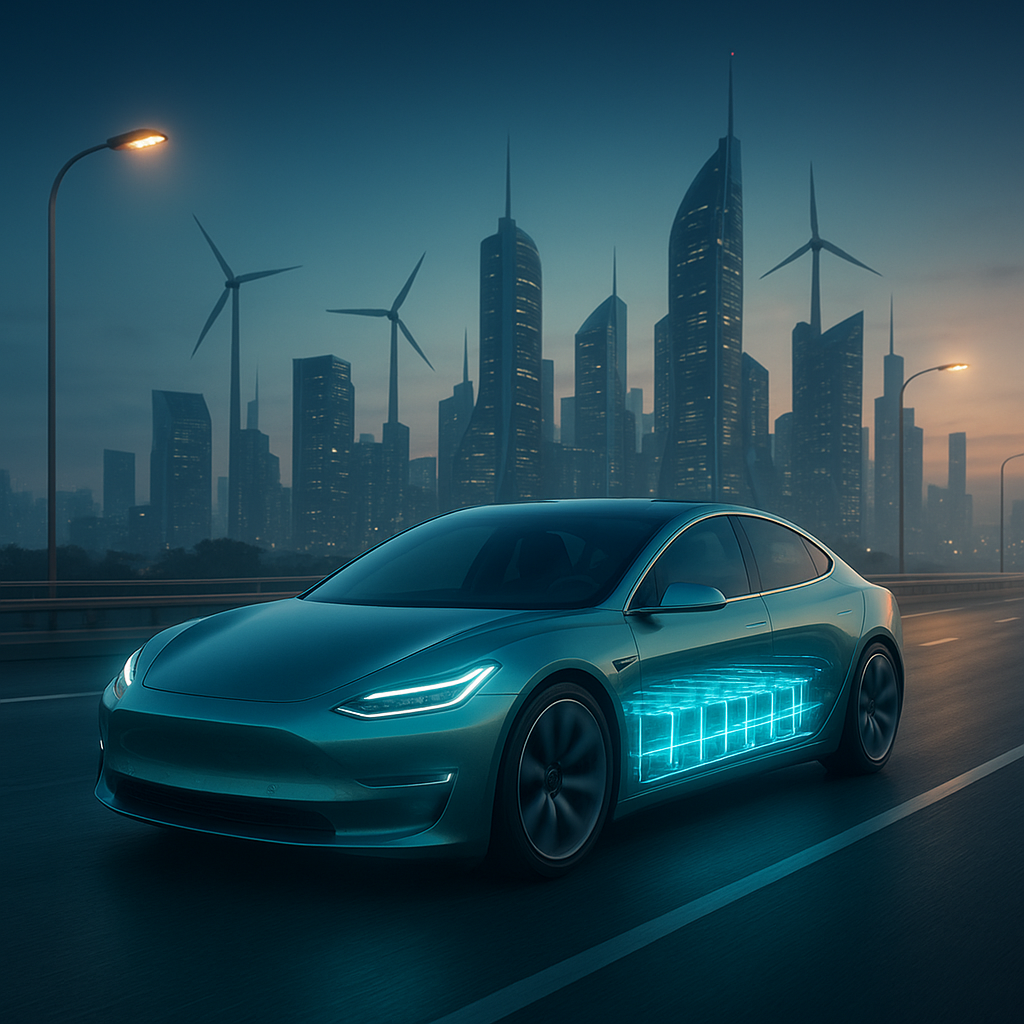

Charging Ahead: A New Era for Electric Vehicle Batteries
In the spring of 2026, the electric vehicle (EV) industry finds itself at a pivotal juncture, fueled by a wave of battery technology breakthroughs that promise to reshape automotive design, consumer experience, and environmental impact. As the global push for decarbonization intensifies, these advances are not just incremental improvements—they represent fundamental innovations in how EV batteries are conceived, manufactured, and utilized.
Consider this: recent reports from NPR highlight that modern EV batteries now routinely exceed 1.2 million miles in total lifespan under optimal conditions, a milestone unimaginable just a few years ago. This dramatic extension in battery durability is coupled with breakthroughs in charging speeds, energy density, and recyclability, signaling a future where electric cars may outlast their traditionally fueled counterparts by decades.
"The acceleration in battery innovation is unlocking new potentials for electric vehicles—far beyond what was predicted five years ago," says Dr. Elena Marquez, a leading EV materials scientist.
This article explores the trajectory of battery technology breakthroughs, from their origins to the cutting-edge developments defining 2026. We examine how these advances affect vehicle performance, sustainability, and the broader energy ecosystem, drawing on expert insights and real-world examples. Readers will also find actionable perspectives on what to expect next in the EV battery revolution.
Tracing the Electric Battery Evolution: Foundations for Today’s Breakthroughs
Electric car batteries have undergone a remarkable transformation since the first commercial lithium-ion battery vehicles appeared in the early 2010s. Initially, limitations in energy density, charging times, and cost hindered mass adoption. The early 2020s saw a surge in incremental improvements—cobalt-reduced cathodes, silicon anode experimentation, and better thermal management—that collectively laid the groundwork for today’s innovations.
Key milestones shaped this progression:
- 2010-2015: Lithium-ion dominance established, with gradual cost declines enabling limited EV market penetration.
- 2016-2020: Introduction of battery management systems (BMS) that improved safety and lifespan; early solid-state battery prototypes emerged.
- 2021-2024: Commercial rollouts of LFP (lithium iron phosphate) batteries offered safer, lower-cost alternatives, especially for mid-range vehicles.
- 2025: Major automakers and suppliers began investing heavily in next-gen chemistries and fast-charging infrastructure.
These phases reflect a transition from experimentation to commercialization and optimization, setting the stage for the breakthroughs that have accelerated in 2026. Understanding this trajectory clarifies why current innovations represent more than just incremental gains—they are the fruit of a decade-long scientific and engineering endeavor.
For readers interested in the technical evolution of batteries beyond automotive applications, related insights can be found in our article on Battery Technology in Electric All Terrain Forklifts, which underscores transferable advances across electric mobility sectors.
2026 Breakthroughs: Materials, Design, and Charging Technologies
The breakthroughs defining 2026 span several interrelated domains—materials science, battery architecture, and charging technologies—all converging to enhance EV performance and user convenience.
Materials Innovations
One of the most transformative developments is the maturation of silicon-dominant anodes combined with lithium-metal anode stabilization. This shift has increased energy densities by up to 40% compared to traditional graphite anodes, enabling longer driving ranges without increasing battery size. Notably, companies like QuantumCell and Panasonic have pioneered proprietary silicon-lithium composites that maintain cycle stability beyond 3,000 full charge-discharge cycles.
Solid-State and Hybrid Architectures
While solid-state batteries have been hyped for years, 2026 marks the year of their practical integration into mid-to-high tier EV models. However, rather than relying solely on pure solid electrolytes, hybrid architectures combining solid electrolytes with liquid or gel polymers have proven more reliable and scalable. Such hybrid designs reduce dendrite formation, enhancing safety and extending battery life.
Ultra-Fast and Smart Charging
Charging speed breakthroughs complement battery chemistry improvements. Innovations in battery management systems, detailed in a recent Yahoo Finance report, enable precise thermal and current control, permitting ultra-fast charging rates without degrading battery health. Some EVs now achieve 80% charge in under 10 minutes at public fast chargers, a game-changing convenience for consumers.
"Advances in battery management systems have been pivotal in achieving fast charging without compromising longevity," explains Sensata Technologies’ chief engineer, highlighting their STEV Series high-voltage contactors that streamline power delivery in EVs, as reported by Morningstar.
Summary of Key 2026 Battery Technology Advances
- Silicon-dominant anodes boost energy density by 35-40%.
- Hybrid solid-state electrolytes increase safety and lifespan.
- Battery management systems enable ultra-fast charging with minimal degradation.
- Modular designs facilitate battery swapping and second-life usage.
Industry Impact and Expert Perspectives
The ripple effects of these breakthroughs extend beyond vehicle performance, influencing manufacturing, supply chains, and policy frameworks. Industry leaders emphasize the strategic importance of these developments for global EV adoption targets.
Automaker Nio’s recent innovations in battery swapping technology, though not solid-state based, illustrate how modular approaches can complement battery chemistry advances. Their new battery swap stations reduce downtime to under three minutes, addressing consumer concerns about charging infrastructure reliability, as covered by Carsguide. This hybrid approach of combining fast charging with battery swapping offers a pragmatic pathway to mass EV adoption.
"Battery technology breakthroughs are not just about chemistry—they require an ecosystem approach involving hardware, software, and infrastructure," comments Dr. Marquez.
Environmental implications are equally significant. Enhanced battery lifespans reduce the frequency of replacements, lowering the ecological footprint of battery manufacturing and disposal. Moreover, recent advances in recycling technologies enable recovery of over 90% of critical metals like lithium, cobalt, and nickel, supporting circular economy principles.
Manufacturers are also optimizing batteries for second-life applications, such as grid storage and off-grid energy solutions, extending the value chain and sustainability impact. Readers interested in broader energy innovations may find parallels in our article on CJC-1295 DAC: Emerging Breakthroughs in Modern Biological Research, which highlights how technological progress in one field often drives advances in others.
Case Studies: Real-World Applications of Next-Gen Batteries
Leading automakers and battery manufacturers have already integrated these breakthroughs into commercial vehicles and pilot projects, providing tangible evidence of their benefits.
Tesla Model Y Plaid Refresh (2026)
The latest Tesla Model Y Plaid employs a silicon-dominant anode battery pack capable of supporting a 400+ mile range and ultra-fast charging at 350 kW stations. Tesla’s proprietary BMS optimizes thermal management, achieving over 1,500 full cycles with less than 10% capacity loss. This model exemplifies how battery chemistry and management advancements translate into superior consumer experiences.
Nio ET7 with Battery Swap Technology
Nio’s ET7 luxury sedan integrates modular battery packs designed for rapid swapping at dedicated stations. The packs use hybrid solid-state electrolytes, balancing high energy density with enhanced safety. This approach minimizes charging downtime and extends battery longevity by enabling pack refurbishment and reuse.
Volkswagen ID. Buzz Electric Van
Volkswagen’s ID. Buzz electric van leverages hybrid battery architectures to provide a balance of range, durability, and cost-efficiency for commercial applications. Its battery system supports vehicle-to-grid (V2G) capabilities, demonstrating how modern batteries are integral to future smart grid ecosystems.
- Silicon-anode Tesla Model Y Plaid: 400+ miles range, ultra-fast 350 kW charging.
- Nio ET7 battery swap: 3-minute swap, hybrid solid-state electrolyte safety.
- Volkswagen ID. Buzz: V2G-enabled hybrid battery system for commercial use.
Looking Ahead: What to Watch in Battery Technology
While 2026’s breakthroughs mark substantial progress, the battery landscape remains dynamic and competitive. Industry watchers and investors should monitor several key trends shaping the near future:
- Commercial Scale Solid-State Batteries: Anticipated by 2028-2030, purely solid-state batteries could revolutionize energy density and safety further.
- Advanced Recycling and Raw Material Sourcing: Innovations in closed-loop recycling and alternative materials like sodium-ion promise to mitigate supply risks and environmental impacts.
- Integration with Renewable Energy: Batteries increasingly serve dual roles in transportation and grid storage, requiring adaptable chemistries and smart controls.
- AI-Driven Battery Management: Emerging generative AI technologies offer unprecedented optimization of charging patterns, degradation prediction, and safety protocols, a field gaining attention alongside breakthroughs in AI highlighted in Emerging Generative AI Breakthroughs Managers Can’t Afford To Ignore.
"The future of EV batteries is a convergence of materials science, AI, and system integration," forecasts Dr. Marquez, underscoring the complexity and opportunity ahead.
Consumers and policymakers alike stand to benefit from these advances, which promise not only to improve electric car affordability and convenience but also to accelerate the transition to sustainable mobility worldwide.
For those interested in the lifecycle considerations of EV batteries, including replacement and maintenance, our comprehensive Battery Replacement Guide offers detailed insights on the evolving challenges and solutions in this domain.
In sum, the battery technology breakthroughs of 2026 represent an inflection point—one that could unlock the full potential of electric vehicles as a cornerstone of clean energy transportation.





























Sign in to leave a comment.