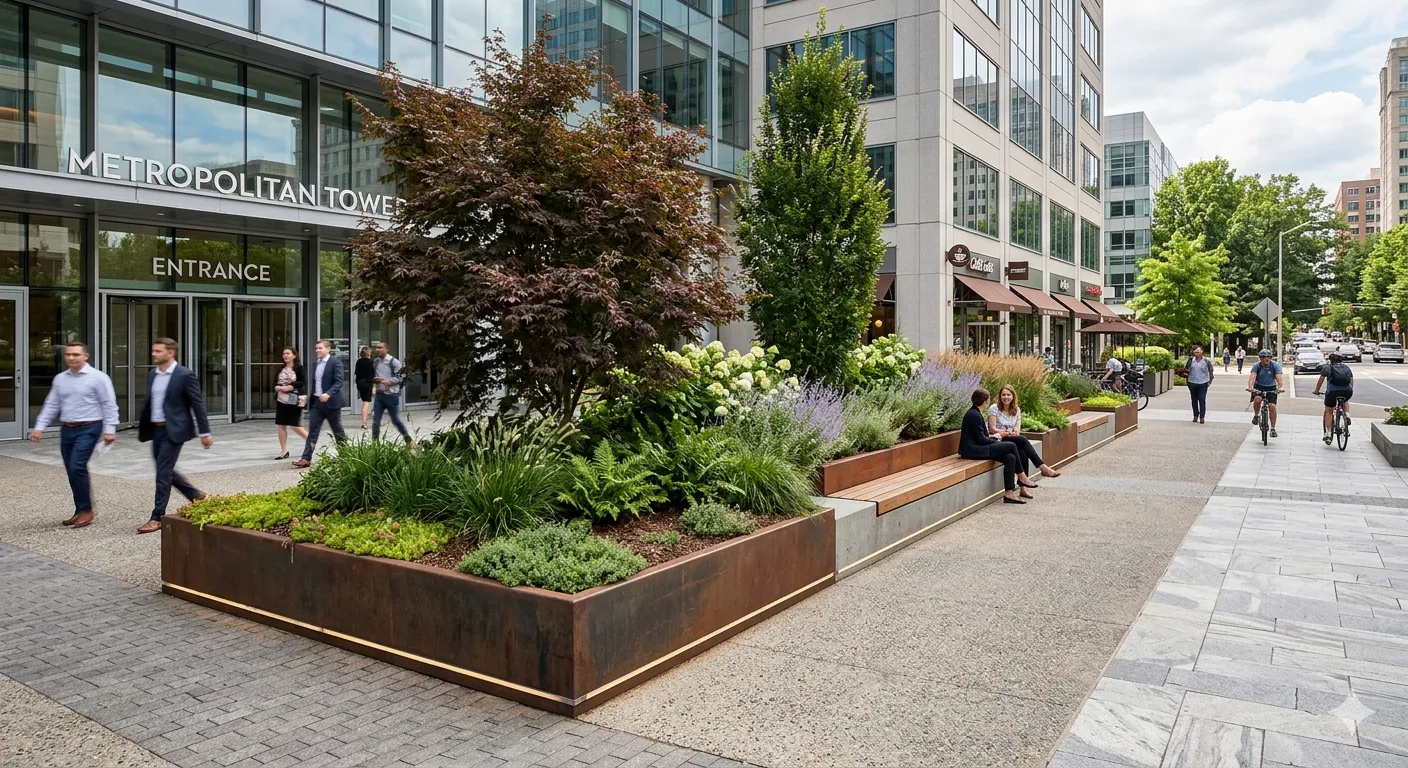

First impressions matter in the corporate world. Whether you manage a boutique hotel, a high-end corporate office, or a bustling retail precinct, the physical environment speaks volumes about your brand's values. Integrating greenery into these environments has transitioned from an aesthetic afterthought to a strategic design necessity. Incorporating commercial planters into modern commercial architecture allows businesses to foster inviting spaces that elevate client perception and boost employee well-being.
Choosing the correct containment systems for your greenery requires a calculated approach. It involves a balancing act between structural durability, material science, and spatial design. This comprehensive guide analyses the leading container solutions available to architects, interior designers, and facility managers, helping you select the perfect architectural pots to transform your commercial property.
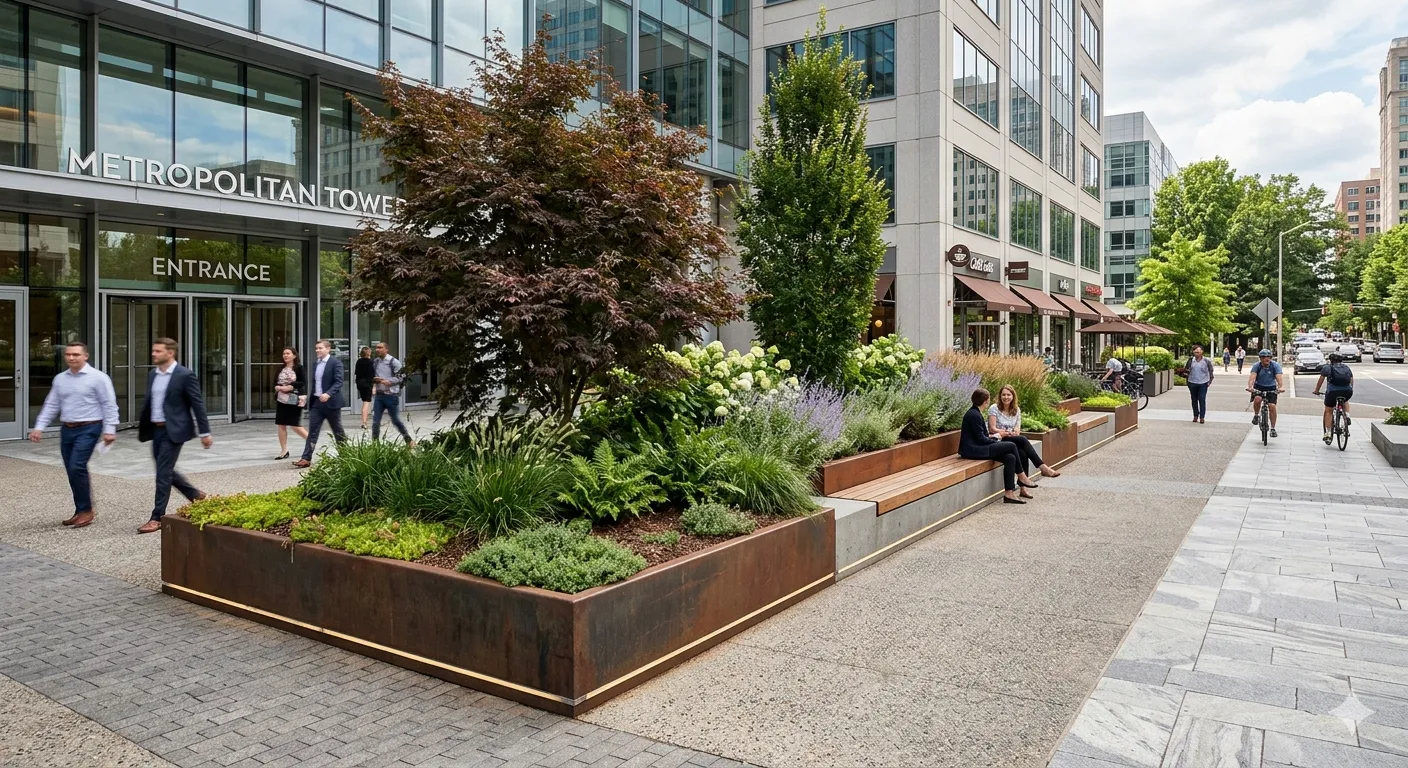
Why Modern Enterprises Rely on Commercial Planters
The contemporary workplace is undergoing continuous evolution, with open-plan layouts, natural light, and biophilic design leading the charge. Biophilic design—the practice of connecting building occupants more closely to nature—is proven to yield tangible economic returns. Research consistently demonstrates that introducing robust flora into professional environments reduces workplace stress, lowers absenteeism, and increases cognitive performance by up to 15 per cent.
To support the substantial root systems of architectural flora, businesses must deploy specialised commercial vessels. Standard residential containers simply cannot withstand the rigours of high-traffic commercial zones. Selecting premium commercial planters ensures that your vegetation thrives while the structural integrity of your flooring and interior finishes remains completely protected over the long term.
Choosing the Ideal Material for Your Business Space
Selecting the right material composition for your greenery installation is critical. The physical properties of your pots dictate their longevity, weight, maintenance schedule, and suitability for specific environments.
Marine-Grade Fibreglass: The Contemporary Standard
For lightweight structural strength and sleek aesthetics, marine-grade fibreglass is an exceptional choice. These vessels are manufactured by layering glass fibres embedded within a reinforced resin matrix.
- The Structural Advantage: Fibreglass possesses an exceptional strength-to-weight ratio. This makes it the premier material when sourcing a large indoor planter destined for structural glass floors or elevated mezzanine levels where weight restrictions apply.
- Aesthetic Versatility: Available in matte, gloss, and textured UV-resistant automotive finishes, these containers easily adapt to any minimalist or ultra-modern corporate aesthetic.
GRC (Glassfibre Reinforced Concrete): Industrial Durability
Glassfibre Reinforced Concrete (GRC) combines the brutalist, authentic look of traditional concrete with enhanced tensile strength and reduced mass. By replacing coarse stone aggregates with high-strength alkali-resistant glass fibres, manufacturers create a product with thin, durable walls.
- High-Traffic Resilience: GRC is highly resistant to impact damage, making it perfect for external retail entryways and public plazas where shopping trolleys or heavy foot traffic pose a risk.
- The Weight Factor: While lighter than poured concrete, a GRC large pot planter provides excellent ballast. This weight ensures stability against strong wind loads in exposed outdoor courtyards.
Premium Metals: Powder-Coated Aluminium and Corten Steel
Metal containers add a refined, premium edge to architectural landscapes.
- Aluminium: Naturally corrosion-resistant, powder-coated aluminium can be customised to match any specific corporate colour palette, offering a clean and precise look.
Corten Steel: Known for its weathering properties, Corten steel develops a stable, self-protecting rust patina over time. It is highly favoured by landscape architects for industrial-chic exteriors and native Australian coastal gardens.
Integrating Large Planter Pots into Interior Layouts
Successfully placing large planter pots throughout an interior floor plan requires careful consideration of spatial scale, pedestrian traffic flow, and horticultural requirements.
High-Impact Reception Areas
Your reception desk or lobby serves as the initial touchpoint for clients, investors, and prospective talent. Placing a large indoor planter populated with architectural specimens—such as a Kentia Palm (Howea forsteriana) or a Fiddle Leaf Fig (Ficus lyrata)—establishes an immediate sense of prestige and environmental awareness. For expansive, double-height atriums, grouping round containers of varying heights creates a dynamic, layered focal point that grounds the scale of the room.
Functional Spatial Partitioning
Modern agile workplaces rely heavily on flexible zones rather than permanent, rigid walls. You can position linear, rectangular planter pots large enough to house dense foliage like the Zanzibar Gem (Zamioculcas zamiifolia) or Snake Plant (Sansevieria trifasciata) to serve as elegant, living privacy screens. These green barriers naturally direct foot traffic, separate collaborative zones from quiet workstations, and provide excellent acoustic dampening by scattering high-frequency office background noise.
Essential Technical Considerations for Commercial Planters
Investing in commercial-grade green infrastructure requires careful attention to technical details to protect your property asset and guarantee plant health.
Comprehensive Water Management Systems
Water damage is a major risk for indoor commercial fit-outs. Unmanaged runoff can ruin expensive engineered timber flooring, stain carpets, or compromise structural subfloors.
- Sub-Irrigation (Self-Watering) Systems: For indoor applications, specify vessels equipped with integrated sub-irrigation reservoirs. These systems deliver water directly to the root structure via capillary action, reducing watering frequencies by up to 70 per cent and eliminating the risk of external leaks.
- Drainage Control: When using a large pot planter outdoors, ensure it features adequate drainage holes and integrated feet to allow free water movement. For indoor setups, utilising fully sealed outer pots paired with internal liners provides a secure, leak-proof solution.
Substrate Selection and Weight Mitigation
The weight of a large container increases dramatically once it is filled with traditional soil and saturated with water. To mitigate structural load concerns on suspended slabs, facility managers should utilise specialised lightweight planting media. Blending premium organic compost with structural aggregates like expanded clay, perlite, or vermiculite ensures excellent root aeration and moisture retention while keeping the overall structural mass to a minimum.
Maintenance Strategies for Corporate Greenery Assets
Maintaining an attractive indoor or outdoor landscape requires an ongoing, proactive approach. To preserve your investment, consider implementing the following operational strategies:
- Professional Facility Management Contracts: Partnering with a dedicated interior plant-scaping service ensures regular watering, leaf polishing, preventative pest management, and timely plant rotations.
- Surface Protection: Always install protective, non-marking glides or subterranean castors beneath planter pots large enough to cause flooring indentation. This preserves carpet pile and prevents moisture trapping beneath flat-bottomed containers.
Surface Cleaning Protocols: Clean exterior surfaces using non-abrasive, pH-neutral soapy water. Avoid harsh chemical solvents or high-pressure washers, which can degrade specialised UV-protective clear coats on fibreglass and aluminium vessels.
Frequently Asked Questions
What differentiates commercial-grade containers from standard retail options?
Commercial containers are specifically engineered to endure high-use environments. They feature thicker wall profiles, internal structural bracing, and advanced UV-stable, chemical-resistant finishes. These enhancements allow them to withstand public impact, extreme weather conditions, and constant commercial cleaning without cracking, warping, or fading.
How do you determine if a commercial space requires drainage holes?
Indoor environments strictly require sealed, non-draining containers paired with internal liners or sub-irrigation reservoirs to prevent water damage to flooring. Conversely, outdoor installations require functional drainage holes to prevent waterlogging during heavy rainfall, which can suffocate plant roots.
Which large plant species thrive best in low-light office environments?
The Zamioculcas zamiifolia (Zanzibar Gem), Sansevieria variations (Mother-in-law's Tongue), and Epipremnum aureum (Devil's Ivy) excel in low-light settings. These resilient species thrive under standard commercial fluorescent or LED lighting and require minimal watering, making them highly cost-effective choices for indoor workspaces.
What lightweight material options are available for weight-restricted building balconies?
Marine-grade fibreglass stands as the premier material for weight-restricted spaces, offering excellent durability without excessive mass. Engineered composite resins and thin-gauge powder-coated aluminium also provide exceptional strength-to-weight ratios well-suited for elevated structural balconies.
Can commercial planters help improve indoor acoustics?
Yes. Grouping large containers with dense, broad-leafed foliage creates an effective, natural acoustic buffer. The combination of flexible plant leaves, porous organic soil media, and structural container walls helps scatter and absorb ambient mid-to-high frequency sound waves, significantly reducing echo and reverb in open-plan workspaces.




















Sign in to leave a comment.